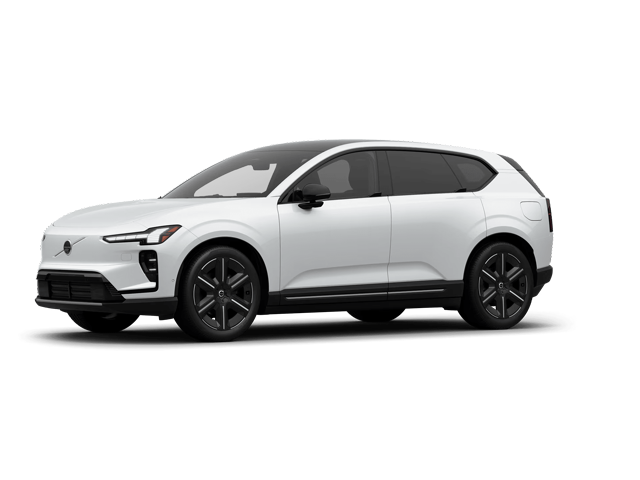
Photo for illustrative purposes only.
Find out moreVolvo Cars Mississauga

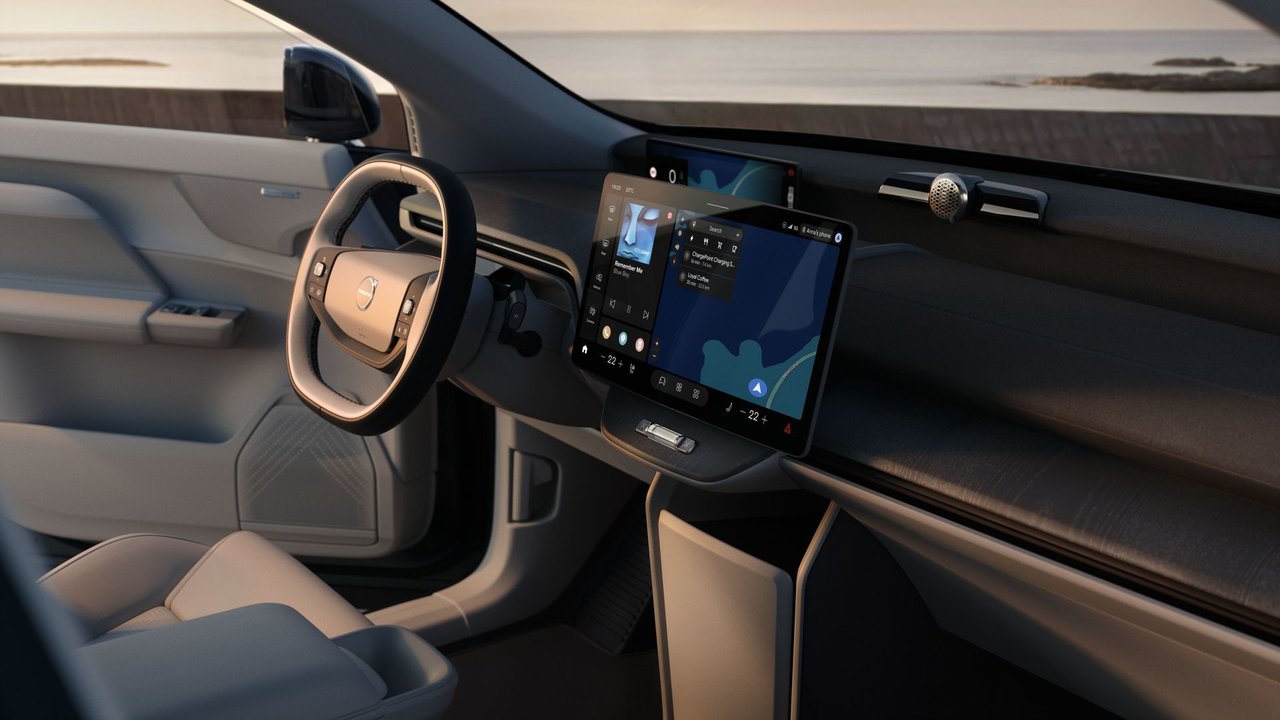
Volvo has been building its reputation on vehicle safety for nearly a century. In 1959, the company invented the three-point safety belt and then made it freely available to the entire industry — a decision that has saved an estimated one million lives globally. It set a standard for how safety innovation gets measured in the automotive world.
The 2026 Volvo EX60, which is open for orders in Canada now with deliveries expected later this year, carries the next evolution of that legacy: the multi-adaptive safety belt. The Automobile Journalists Association of Canada recognized it with the Best Safety Innovation Award for 2026 — the same organization that evaluates the full field of new vehicles entering the Canadian market each year. For Mississauga families evaluating the EX60, understanding what this technology actually does and how it fits into the vehicle's broader safety architecture is worth a closer look.
What a Conventional Safety Belt Does — and Where It Stops
A standard three-point safety belt does one thing: it restrains the occupant during a collision by distributing force across the shoulder, chest, and lap. It does this with a fixed anchor geometry, a single webbing tension system, and a pre-tensioner that fires on impact to remove slack.
The belt does not adjust to the size of the occupant. It does not distinguish between a collision that is frontal versus side-impact. It does not account for whether the seat is reclined. And it cannot alter the force distribution based on how the occupant is positioned at the moment of a crash. These are not design oversights — they are the inherent limits of a system designed for universal mechanical simplicity.
The multi-adaptive safety belt in the EX60 is built to address those limits.
What the Multi-Adaptive Safety Belt Does Differently
Volvo describes the multi-adaptive safety belt as a world-first safety innovation. The system sits in the EX60's front row and provides what Volvo terms "smarter, more personalized protection" for front-seat occupants. HuginCore, the EX60's onboard computing system, works alongside the vehicle's sensor array to enable the belt's adaptive behaviour.
While Volvo has not published the full technical specification of every adjustment the belt makes, the core principle is adaptive response: the belt's behaviour during a crash event can vary based on the specific dynamics of the collision rather than applying a fixed mechanical response uniformly. The system is designed to work in coordination with the EX60's other restraint technologies and the boron steel safety cage that forms the structural core of the vehicle.
The multi-adaptive belt is part of the broader Volvo Cars Safety Standard, which the EX60 is described as the purest expression of to date. This standard goes beyond regulatory requirements, using the car's sensor suite and computing capacity to assess the environment around the vehicle continuously.
The Safety Architecture Around It

The belt does not function in isolation. The EX60's passive safety structure includes several elements that work together:
Why the AJAC Award Matters
The Automobile Journalists Association of Canada runs one of the most rigorous vehicle evaluation programs in the country. Their annual awards cover everything from best new SUV categories to specific innovation awards, and their jury evaluates vehicles across the full Canadian market. The Best Safety Innovation Award for 2026 going to the EX60's multi-adaptive safety belt is a specific recognition of the technology's originality and relevance to Canadian consumers — not a general vehicle quality award.
For Mississauga families comparing the EX60 to competing electric mid-size SUVs, this distinction is worth noting. Safety ratings from crash test organizations evaluate outcomes — how much protection a vehicle provided in a standardized test. An innovation award evaluates the mechanism — what new approach the vehicle introduces that did not exist before.
Key Takeaways
|
Feature |
What It Is |
Why It Matters |
|---|---|---|
|
Multi-adaptive safety belt |
World-first front-row restraint system |
Personalized protection beyond fixed-response belts |
|
Boron steel safety cage |
Structural reinforcement built on SPA3 |
High-strength protection around the electric platform |
|
HuginCore sensor integration |
250+ trillion ops/sec processing |
Enables real-time adaptive safety responses |
|
AJAC Best Safety Innovation 2026 |
Award from Canadian automotive journalists |
Independent recognition of the technology's significance |
|
Volvo Cars Safety Standard |
Comprehensive active and passive suite |
Goes beyond regulatory minimums across the lineup |
Learn More at Volvo Cars Mississauga
The EX60 is open for orders and deposits in Canada, with Canadian customer deliveries expected later in 2026. Our team at Volvo Cars Mississauga can walk you through the full safety technology suite, the two available trim levels, and delivery timelines. Stop by or get in touch to start a conversation about the EX60 and what it would mean for your family in Ontario.
Photo for illustrative purposes only.
Find out more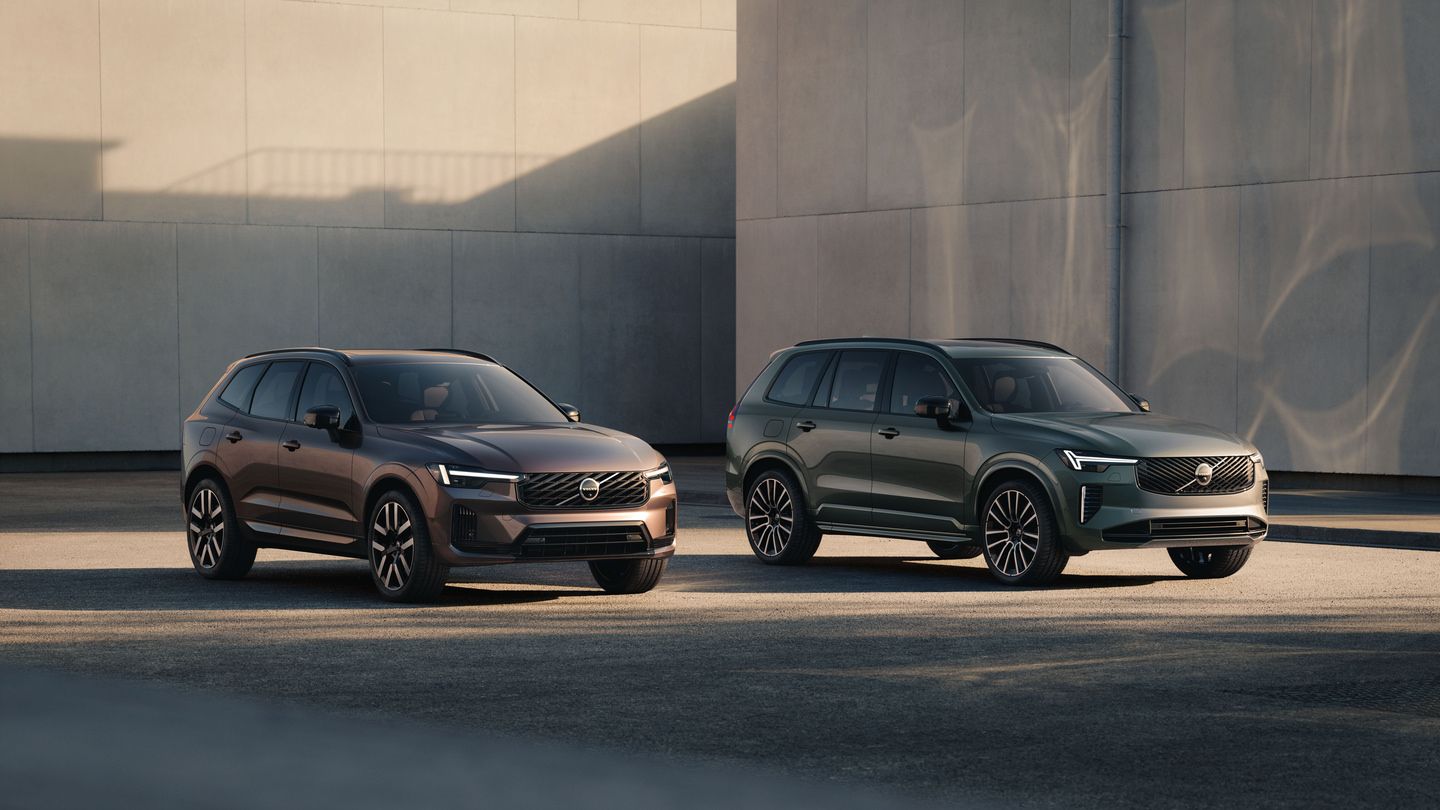
Volvo Increases the Range of the 2028 XC60 and XC90 Plug-in Hybrid SUVs
Volvo has given two of its most popular SUVs a longer electric range. The plug-in hybrid XC60 and XC90 now travel further on battery power alone...
Read more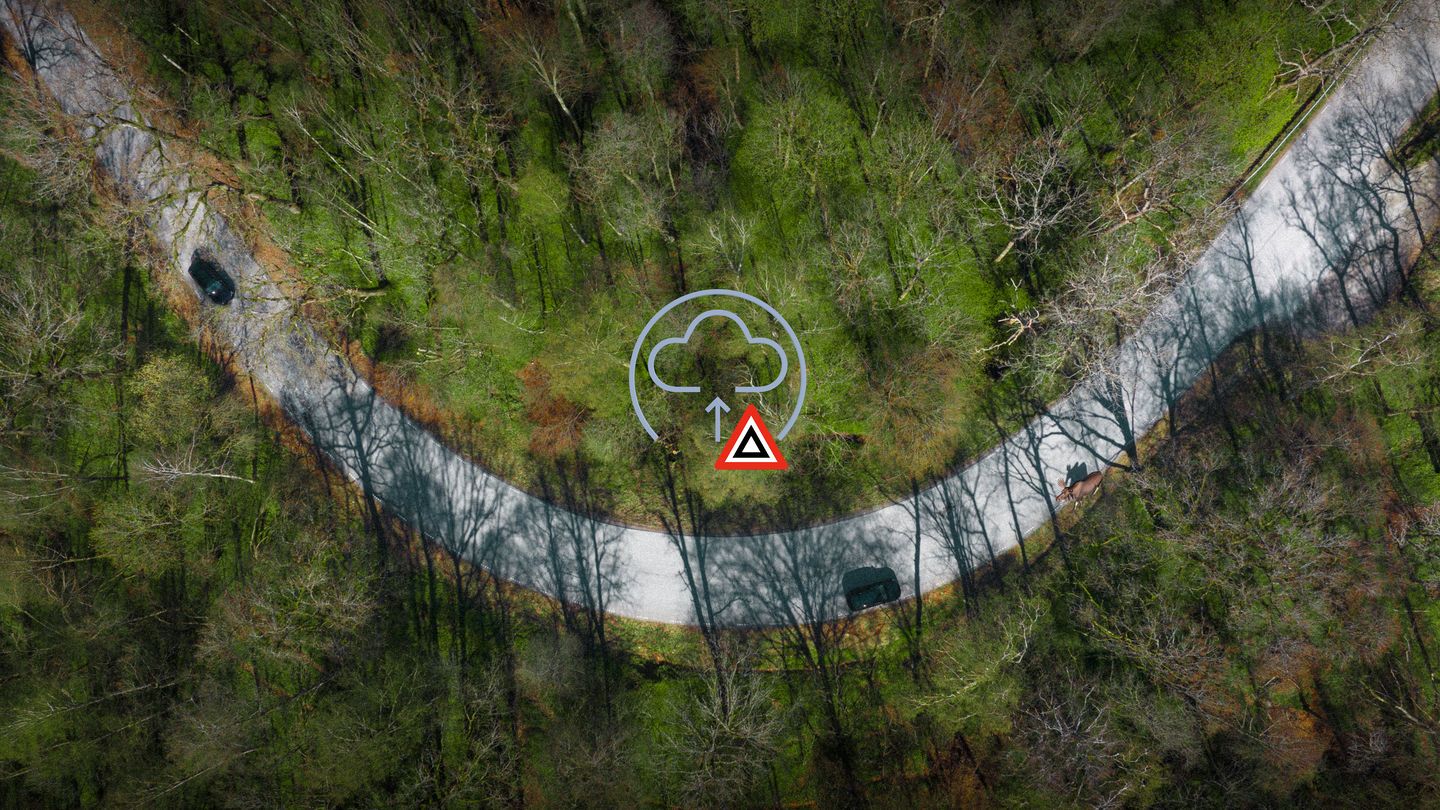
Volvo Adds New Ways for the EX60 to Warn You of Hidden Dangers
Some of the most dangerous moments on the road are the ones you never see coming: an animal stepping out from a treeline, a cyclist just past a...
Read more
A Look at the Things Volvo's Voice Assistant Can Do
Talking to your car sounds like something out of a movie, but it has quietly become one of the more useful parts of driving a modern Volvo. Between...
Read morePowered and developed by
