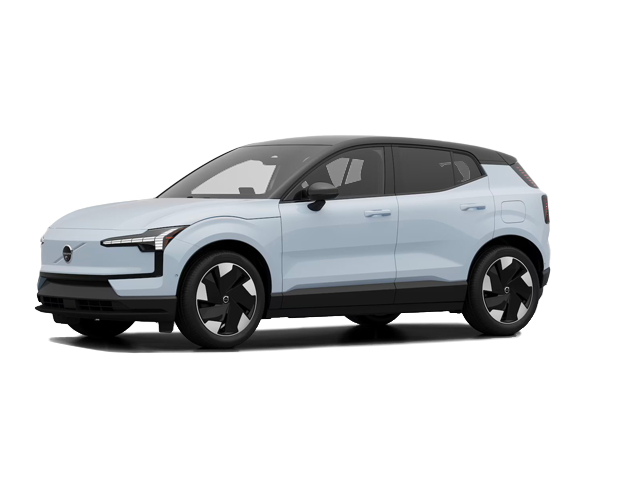
Photo for illustrative purposes only.
Find out moreVolvo Cars Mississauga

Electric vehicle ownership requires understanding charging infrastructure, home electrical requirements, and trip planning approaches that differ fundamentally from gasoline vehicle refueling patterns. For Mississauga drivers considering the EX30, EX40, EC40, or EX90, practical knowledge about Ontario's charging landscape and how Volvo's Google built-in navigation integrates with charging networks determines whether electric vehicle ownership fits their lifestyle. This article explains the three charging levels available, realistic charging times for each Volvo electric model, home installation considerations for Ontario residences, public charging infrastructure across the province, and how Google Maps in your Volvo plans routes that account for charging stops automatically.
The transition from gasoline to electric requires adjusting expectations about refueling. Gasoline stations appear every few kilometres, fill-ups complete in five minutes, and range rarely factors into route planning. Electric vehicle charging works differently—most charging occurs at home overnight, public charging takes longer than gasoline fill-ups, and longer trips require planning around charging station locations and availability. Understanding these operational differences before purchase prevents frustration and ensures electric vehicle ownership delivers the convenience and cost savings it promises.
Level 1 Charging: Standard Household Outlets
Level 1 charging uses standard 120-volt household outlets—the same three-prong receptacles that power lamps, televisions, and small appliances. Every Volvo electric vehicle includes a portable charging cable that plugs into these outlets, providing charging capability without installing dedicated equipment. This represents the lowest cost entry point for home charging, requiring zero installation beyond ensuring the outlet circuit can handle continuous load.
The limitation lies in charging speed. Level 1 charging delivers approximately 1.4 to 1.9 kilowatts of power, adding roughly 6 to 8 kilometres of range per hour of charging. For perspective, leaving an EX30 plugged into a standard outlet overnight for 10 hours adds 60 to 80 kilometres of range. This suffices for drivers whose daily commutes stay within this distance and who can charge every night, but falls short for anyone driving more than 50 kilometres daily or unable to charge nightly.
Level 1 charging works as emergency backup or temporary solution but doesn't serve as primary charging for most drivers. Someone commuting 30 kilometres round trip could manage with Level 1 if they charge every night without fail. Miss a night due to forgetting to plug in or needing the outlet for other purposes, and the deficit compounds quickly. Weekend trips that consume 150 kilometres of range require multiple days of charging to recover, limiting spontaneous travel.
Ontario winters create additional challenges for Level 1 charging. Cold temperatures reduce battery charging efficiency and increase energy consumption for cabin heating. The same overnight charging session that adds 70 kilometres in summer might add only 50 kilometres in January. Battery preconditioning while plugged in—warming the battery before departure—consumes additional electricity that reduces net range added. Drivers relying on Level 1 charging should calculate based on winter performance, not optimal summer conditions.
Level 1 charging makes sense in limited scenarios: extremely short daily commutes under 40 kilometres round trip, homes where Level 2 installation isn't feasible due to electrical panel limitations or rental restrictions, or as supplemental charging at cottages or secondary properties visited occasionally. For primary home charging supporting typical driving patterns, Level 2 installation provides substantially better experience.
Level 2 Charging: The Home Charging Solution
Level 2 charging uses 240-volt circuits identical to those powering electric dryers, ovens, and air conditioners. Installing a Level 2 charging station at home requires an electrician to run a dedicated 240-volt circuit from the electrical panel to the charging location—typically a garage wall or exterior outlet near where the vehicle parks. This installation represents the standard solution for electric vehicle owners with garages or driveways and adequate electrical panel capacity.
Charging speed increases dramatically compared to Level 1. Level 2 stations deliver 7 to 19 kilowatts depending on circuit amperage and vehicle charging capacity. At 32 amps (the most common residential installation), Level 2 charging adds approximately 40 to 50 kilometres of range per hour. An EX40 with its 79 kWh usable battery capacity charges from empty to full in approximately 8 to 13 hours depending on amperage. For typical daily driving that consumes 50 to 100 kilometres, plugging in overnight fully replenishes the battery with time to spare.
Volvo electric vehicles accept Level 2 charging at these rates:
The EX30 with its 65 kWh usable battery charges fully in 11 hours at 32 amps, 23 hours at 16 amps, or 39 hours at 10 amps. The compact battery size means even moderate Level 2 charging speeds handle daily needs effectively. The EX40 and EC40 with 79 kWh usable capacity require 13 hours at 32 amps, 25 hours at 16 amps, or 42 hours at 10 amps. Higher amperage circuits reduce charging time proportionally. The EX90 with 107 kWh usable capacity charges in 10 hours at 48 amps, 15 hours at 32 amps, 29 hours at 16 amps, or 45 hours at 10 amps.
Installation costs for Level 2 charging in Ontario vary based on distance from electrical panel to charging location, panel capacity available, and whether panel upgrades prove necessary. A straightforward installation in a garage with the electrical panel nearby and adequate capacity typically costs $1,000 to $2,000 including the charging station hardware. More complex installations requiring panel upgrades, lengthy wire runs, or trenching to reach outdoor charging locations can exceed $3,000 to $5,000.
Ontario electrical codes require dedicated circuits for Level 2 charging—the circuit cannot power other devices. The electrician must verify the home's electrical panel has capacity for the additional continuous load. Older homes with 100-amp service may lack capacity for high-amperage Level 2 charging without panel upgrades. Newer homes with 200-amp service typically accommodate Level 2 charging without issues, though homes with electric heating, electric water heaters, and other high-draw appliances should be assessed carefully.
Renters face additional complications. Installing Level 2 charging in apartment parking garages or rented homes requires landlord permission and raises questions about ownership of installed equipment and cost recovery when moving. Some Ontario municipalities and provinces offer incentive programs for landlords installing EV charging infrastructure, but availability varies. Renters should verify charging access before purchasing electric vehicles or negotiate installation permissions with landlords before committing to lease agreements.
The upcoming 2027 EX60 introduces 800-volt charging architecture that accepts up to 11 kilowatts on standard Level 2 chargers, faster than current 400-volt Volvo models. This means future EX60 owners will see reduced home charging times compared to EX40 or EX90 owners using identical Level 2 equipment.
Level 3 DC Fast Charging: Public Charging Network
Level 3 charging, also called DC fast charging, delivers high power directly to the vehicle's battery using direct current rather than the alternating current used by Level 1 and Level 2 chargers. These stations appear along highways, in urban charging hubs, and at commercial locations, serving drivers who need rapid charging during longer trips or lack home charging access.
Charging speeds at DC fast chargers depend on both the station's power output and the vehicle's charging acceptance rate. Current Volvo electric vehicles accept DC fast charging at these maximum rates:
The EX30 accepts up to 153 kilowatts, charging from 10 to 80 percent in approximately 27 to 28 minutes at compatible 175 kilowatt stations. Real-world charging to 80 percent takes closer to 30 to 35 minutes accounting for charging curve characteristics and temperature conditions. The EX40 and EC40 accept up to 200 kilowatts, charging from 10 to 80 percent in approximately 28 minutes at 200 kilowatt stations. The EX90 accepts up to 250 kilowatts, charging 10 to 80 percent in approximately 30 minutes.
The 2027 EX60's 800-volt architecture accepts up to 400 kilowatts at compatible stations, adding 270 kilometres of range in 10 minutes. This represents the fastest charging capability in Volvo's lineup, addressing range anxiety through speed rather than just capacity.
DC fast charging follows a charging curve rather than maintaining constant power throughout the session. Charging speed peaks when battery state of charge sits between 10 and 50 percent, then gradually decreases as the battery approaches 80 percent. The final 20 percent from 80 to 100 percent charges much slower than the initial 70 percent. For this reason, DC fast charging sessions typically target 80 percent rather than full charge—the time required to charge from 80 to 100 percent often exceeds the time needed to reach 80 percent from near-empty.
Ontario's DC fast charging network continues expanding but remains concentrated along major highways and urban centers. Highway 401 between Windsor and the Quebec border features DC fast chargers at intervals of approximately 80 to 120 kilometres, though gaps exist in some rural sections. Highway 400 north toward Barrie and beyond has charging stations but with wider spacing than the 401 corridor. Secondary highways serving cottage country and northern Ontario have limited fast charging infrastructure, requiring careful trip planning.
Mississauga drivers have access to DC fast charging stations at locations including shopping centers along Highway 401, Pearson Airport parking facilities, and dedicated charging hubs in the Greater Toronto Area. ChargePoint, Electrify Canada, Flo, Ivy, and Tesla Supercharger networks all operate stations in the region, though not all networks support all vehicles without adapters.
Volvo's partnership with Tesla provides access to the Tesla Supercharger network—18,000+ charging stalls across North America. This substantially increases charging options for Volvo electric vehicle owners, particularly in regions where other networks have limited coverage. Access requires a CCS-to-Tesla adapter that Volvo provides, allowing the vehicle's CCS charging port to connect to Tesla Supercharger stations.
DC fast charging costs significantly more per kilometre than home charging. While exact pricing varies by network and location, typical DC fast charging rates in Ontario range from $0.50 to $0.70 per minute or $0.40 to $0.55 per kilowatt-hour. A charging session adding 200 kilometres of range might cost $15 to $25, compared to $3 to $5 for the same range charged at home using Ontario residential electricity rates. Frequent DC fast charging increases operating costs substantially compared to gasoline-free home charging that makes electric vehicles economical.
Extreme cold affects DC fast charging more dramatically than home charging. Battery chemistry requires specific temperature ranges for optimal charging speeds. In winter, the vehicle must precondition the battery—warming it to accept high-power charging—before arriving at the DC fast charger. This preconditioning occurs automatically when using Google Maps navigation to route to a charging station, but doesn't happen if you simply drive to a charger without navigating to it. Without preconditioning, charging speeds can be cut in half or more in cold weather.
Google Maps Integration and Intelligent Trip Planning

Electric Volvos include Google built-in, providing Google Maps navigation that integrates directly with the vehicle's charging systems rather than simply mirroring a smartphone app. This integration enables trip planning that accounts for battery state of charge, charging station locations, expected charging times, and route optimization that considers charging stops automatically.
When you enter a destination in Google Maps that exceeds your current range, the system calculates an optimal route including necessary charging stops. The navigation doesn't simply find the closest charger—it analyzes multiple factors: your current battery level, charging stations along various route options, each station's charging speed, expected traffic delays, and predicted battery consumption based on route elevation, weather, and driving conditions.
The system displays the planned route with charging stops marked, showing estimated arrival battery percentage at each stop and suggested charging duration. These estimates account for the charging curve—the system knows that charging to 60 percent takes less time than the final 20 percent to reach 80 percent, and plans stops accordingly. For long trips requiring multiple charging sessions, the navigation may suggest shorter first stops and longer final stops, or vice versa depending on station locations and route efficiency.
Battery preconditioning activates automatically when navigating to a charging station through Google Maps. The vehicle warms or cools the battery to optimal temperature for accepting high-power charging, ensuring maximum charging speed upon arrival. This preconditioning prevents the common mistake of arriving at a fast charger with a cold battery that accepts charging at drastically reduced speeds. The system manages preconditioning timing to complete conditioning just before arrival, minimizing energy consumption while ensuring charging readiness.
Real-time charger availability appears in Google Maps when approaching planned charging stops. The system shows how many stalls are available, which are occupied, and whether any stations are offline or experiencing reduced functionality. This information allows rerouting to alternative chargers if your planned stop shows full occupancy. The data comes from charging network operators and other drivers, though accuracy varies by network and location.
Google Maps also suggests charging opportunities during longer stops where you'll be parked anyway. If your route includes a lunch stop or shopping destination, the navigation identifies nearby charging stations and estimates how much range you could add during your stop. This transforms necessary breaks into charging opportunities, reducing or eliminating dedicated charging stops.
The system learns from your driving patterns over time. If you regularly drive specific routes, it refines consumption estimates based on your actual driving style rather than generic averages. This personalization improves accuracy for range predictions and charging stop recommendations, though it requires driving the vehicle for some time before the system accumulates useful data.
You can adjust charging preferences in the Google Maps settings. Options include preferred charging networks (useful if you subscribe to specific network memberships that offer lower rates), minimum battery level at destination (if you want to arrive with buffer beyond the minimum viable charge), and maximum charging stop duration (if you prefer more frequent short stops versus fewer long stops). These preferences affect route planning and charging stop selection.
Winter Charging Considerations Specific to Ontario
Ontario winters create challenges for electric vehicle charging that warm-climate regions don't experience. Understanding these cold-weather factors prevents surprise and helps set appropriate expectations for winter charging performance.
Battery capacity decreases in cold temperatures. The same battery that provides 420 kilometres of range in 20-degree weather might deliver only 320 kilometres in minus 20-degree conditions. This reduction results from both decreased battery efficiency at low temperatures and increased energy consumption for cabin heating. The impact varies based on trip length—short trips show larger percentage decreases because cabin heating consumes a larger proportion of total energy, while longer highway trips show smaller impacts because heating demand stabilizes after the initial warm-up period.
Home charging in winter requires longer sessions to deliver the same usable range. If your summer overnight charging session adds 300 kilometres of range, expect winter sessions to add 200 to 250 kilometres depending on temperature. Level 2 charging at adequate amperage still handles daily commuting needs, but margin for error decreases. Drivers who barely kept up with consumption using Level 2 charging in summer may find themselves falling behind in winter without adjusting habits or increasing charging frequency.
Battery preconditioning while plugged in provides significant benefit. Scheduling departure times through the Volvo Cars app triggers preconditioning that warms the battery and cabin before you leave while the vehicle remains connected to power. This eliminates the cold-start penalty where the battery must heat itself using stored energy, reducing available range. Preconditioned vehicles show noticeably better range on cold mornings compared to vehicles that sat unplugged overnight.
DC fast charging in extreme cold requires patience. Even with automatic preconditioning when navigating to chargers, very cold batteries may initially accept charging at reduced rates. The charging system warms the battery during the early portion of the session, with charging speed increasing as battery temperature rises. A charging session that takes 30 minutes at 20 degrees might require 40 to 45 minutes at minus 20 degrees. Plan additional time for winter road trips that depend on DC fast charging.
Some charging stations experience reduced reliability in extreme cold. Exposed touchscreens may freeze, payment terminals can malfunction, and charging cables become stiff and difficult to handle. Charging networks with better-maintained equipment and covered charging stalls perform more reliably in harsh winter conditions. Check recent user reviews for charging stations along winter routes to identify locations with consistent winter performance.
Public Charging Networks in Ontario
Ontario's public charging infrastructure includes multiple networks, each requiring separate accounts and offering different pricing structures. Understanding the major networks helps plan trips and manage charging costs.
ChargePoint operates extensively throughout Ontario, with Level 2 chargers at retail locations, parking facilities, and municipal properties, plus DC fast chargers along major corridors. ChargePoint uses a membership model with per-minute or per-kilowatt-hour pricing that varies by location. Some ChargePoint stations charge no fees while others bill at premium rates. The ChargePoint app shows station locations, availability, and pricing before arrival.
Electrify Canada focuses on DC fast charging along highways and in urban centers. Stations typically offer 150 kilowatt and 350 kilowatt charging capacity, though Volvo vehicles currently max out at 250 kilowatts (400 kilowatts for the upcoming EX60). Electrify Canada uses session-based pricing or per-minute charging fees depending on location. A membership program offers reduced rates for frequent users.
Flo operates primarily in Quebec but maintains growing presence in Ontario, particularly in eastern regions near the Quebec border and in Ottawa. Flo stations include both Level 2 and DC fast chargers with pay-as-you-go or membership pricing. The Flo network integrates well with Quebec's extensive charging infrastructure, making it valuable for Ontario drivers who travel to Montreal or Quebec City.
Ivy operates DC fast charging stations across Canada with focus on Trans-Canada Highway coverage. Stations feature 100 kilowatt and 350 kilowatt chargers with per-kilowatt-hour pricing. Ivy stations appear in smaller communities that other networks don't serve, filling gaps in highway charging coverage.
Tesla Supercharger network accessibility for Volvo vehicles expands charging options significantly. The network's reliability, extensive coverage, and consistent user experience provide confidence for longer trips. Tesla Superchargers use per-kilowatt-hour pricing in Ontario, with rates competitive with other DC fast charging networks. The adapter required to connect Volvo vehicles to Tesla Superchargers comes from Volvo and must be kept in the vehicle for use when needed.
Petro-Canada Electric network operates DC fast chargers at Petro-Canada service stations along major highways. This provides familiar location types for drivers accustomed to refueling at recognizable brands. The stations accept multiple payment methods including the network app, credit cards, and sometimes direct vehicle payment where supported.
Cost Comparison: Home Charging vs. Public Charging
Understanding charging costs helps set accurate expectations for electric vehicle operating expenses. Home charging provides the most economical option while public DC fast charging costs approach gasoline pricing on a per-kilometre basis.
Ontario residential electricity rates vary by time of use under most utility plans. Off-peak rates (typically 7 PM to 7 AM on weekdays and all day weekends) charge approximately $0.074 per kilowatt-hour. Mid-peak rates run approximately $0.102 per kilowatt-hour, while on-peak rates reach approximately $0.151 per kilowatt-hour. These rates apply to Toronto Hydro and similar Ontario utilities, though specific pricing varies by utility provider.
Charging an EX40 at home using off-peak electricity costs approximately $5.85 to add 300 kilometres of range (consuming roughly 79 kWh). The same range using mid-peak electricity costs approximately $8.06, while on-peak charging costs approximately $11.93. Scheduling charging to occur during off-peak hours maximizes cost savings—this happens automatically by setting departure times in the vehicle or through the Volvo Cars app.
Public DC fast charging costs substantially more. Using typical Ontario DC fast charging rates of $0.50 per kilowatt-hour, adding 300 kilometres of range costs approximately $39.50. This approaches the cost of driving 300 kilometres in a gasoline vehicle averaging 9 L/100 km with gasoline at $1.40 per litre (approximately $37.80). The economic advantage of electric vehicles diminishes significantly when relying primarily on public DC fast charging rather than home charging.
For drivers who commute daily and charge exclusively at home using off-peak electricity, operating costs run approximately $40 to $60 monthly depending on driving distance. Those same drivers using gasoline vehicles would spend $150 to $250 monthly on fuel. The cost savings accumulate substantially over years of ownership, though require home charging access to realize fully.
Charging Etiquette and Best Practices
Public charging station use involves informal etiquette that helps maintain network reliability and ensures availability for all drivers.
Move your vehicle promptly after charging completes. DC fast charging stations charge idle fees if vehicles remain connected after charging ends—rates often exceed charging fees to encourage timely departure. Set notifications through the vehicle's app to alert you when charging nears completion so you can return to the vehicle and free the station for others.
Don't occupy charging stations when not charging. Using a charging parking space without connecting to the charger prevents others from accessing needed infrastructure. Park in regular spaces when not charging, even if the charging spot sits closer to your destination.
Report malfunctioning equipment through the charging network's app. Broken stations that go unreported remain offline longer, reducing network reliability for everyone. Most networks offer credit or compensation when you report equipment failures.
In cold weather, don't criticize slower charging speeds or battery performance you observe in other vehicles. Battery temperature and state of charge affect charging speeds dramatically—someone charging slowly may be dealing with a cold battery rather than equipment malfunction.
Return charging cables to holsters properly. Cables left on the ground accumulate dirt, suffer damage from vehicle wheels, and create tripping hazards. Take five seconds to replace cables in their storage holsters after disconnecting.
Trip Planning for Longer Journeys
Planning trips beyond your vehicle's single-charge range requires considering factors beyond simple station locations.
Review your planned route in Google Maps before departing. Verify that suggested charging stops make sense based on your preferences—if the navigation suggests a 45-minute charging stop but you prefer multiple shorter stops, adjust waypoints to force stops at preferred intervals.
Build in buffer time for charging delays. If Google Maps estimates a charging stop will take 25 minutes, allow 35 to 40 minutes in your schedule. Stations may be busier than expected, equipment might require using slower stalls, and cold weather can extend charging times. Rushing charging stops creates stress that undermines the relaxed travel electric vehicles can provide.
Download charging network apps for networks along your route before departing. Having accounts established and payment methods configured prevents delays when arriving at charging stations. Some stations require app-based activation rather than credit card readers, so advance setup proves essential.
Consider alternative routes that trade minor distance increases for better charging infrastructure. A route 20 kilometres longer but with newer, more reliable charging stations may provide better travel experience than the shortest route with sparse or unreliable charging.
Pack the charging adapter for Tesla Supercharger access. The adapter lives in the vehicle's storage compartments but can be forgotten when switching items between vehicles. Verify the adapter's presence before longer trips that might require Tesla Supercharger use.
Check weather forecasts for your entire route, not just your origin and destination. Severe cold or storms can significantly impact range and charging times. Extreme weather may warrant adding an extra charging stop or selecting routes with more frequent charging options.
Making the Transition to Electric Vehicle Ownership
Successfully transitioning to electric vehicle ownership requires adjusting habits and expectations developed through decades of gasoline vehicle operation.
Accept that charging takes longer than refueling. This isn't a deficiency—it's a different operational model. The advantage comes from charging at home overnight, eliminating weekly gas station trips entirely. The handful of longer trips requiring public charging per year represent minor inconvenience balanced against year-round convenience of home charging.
Install Level 2 home charging before or immediately after vehicle delivery. Attempting to manage with Level 1 charging creates frustration and prevents experiencing electric vehicle ownership at its best. The installation cost pays back quickly through avoided gasoline expenses and improved daily convenience.
Plan to charge to 80 percent for daily use rather than 100 percent. Lithium-ion batteries last longer when regularly charged to 80 percent rather than full. Charge to 100 percent before longer trips where you need maximum range, but return to 80 percent charging for daily driving. Volvo vehicles allow setting maximum charge level to automate this practice.
Download and configure the Volvo Cars app before delivery. The app provides remote access to charging status, allows scheduling departure times for preconditioning, and enables starting or stopping charging sessions remotely. Familiarity with the app before taking delivery makes the first days of ownership smoother.
Drive your first longer trip during daylight on a weekend when you can take time to familiarize yourself with DC fast charging without schedule pressure. The relaxed first experience builds confidence for subsequent trips where timing matters more.
Join online communities of Volvo electric vehicle owners. Facebook groups, Reddit communities, and Volvo-specific forums provide advice about charging station reliability, winter driving tips specific to your region, and solutions to common questions from experienced owners.
Contact our sales team at Volvo Cars Mississauga in Mississauga to discuss electric vehicle charging logistics specific to your home location, daily driving patterns, and typical trip destinations, ensuring electric vehicle ownership aligns with your lifestyle before purchase.
Photo for illustrative purposes only.
Find out more
Volvo Increases the Range of the 2028 XC60 and XC90 Plug-in Hybrid SUVs
Volvo has given two of its most popular SUVs a longer electric range. The plug-in hybrid XC60 and XC90 now travel further on battery power alone...
Read more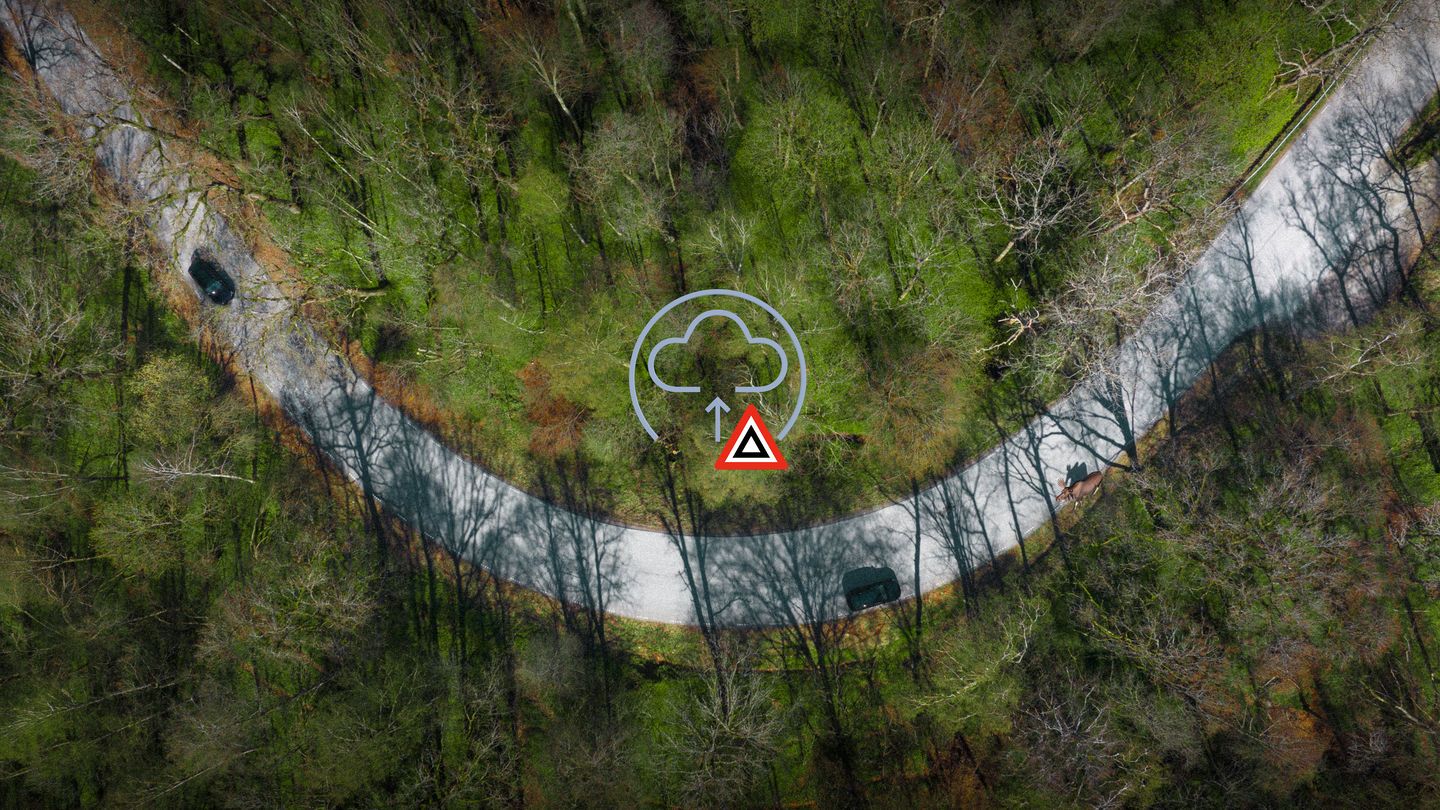
Volvo Adds New Ways for the EX60 to Warn You of Hidden Dangers
Some of the most dangerous moments on the road are the ones you never see coming: an animal stepping out from a treeline, a cyclist just past a...
Read more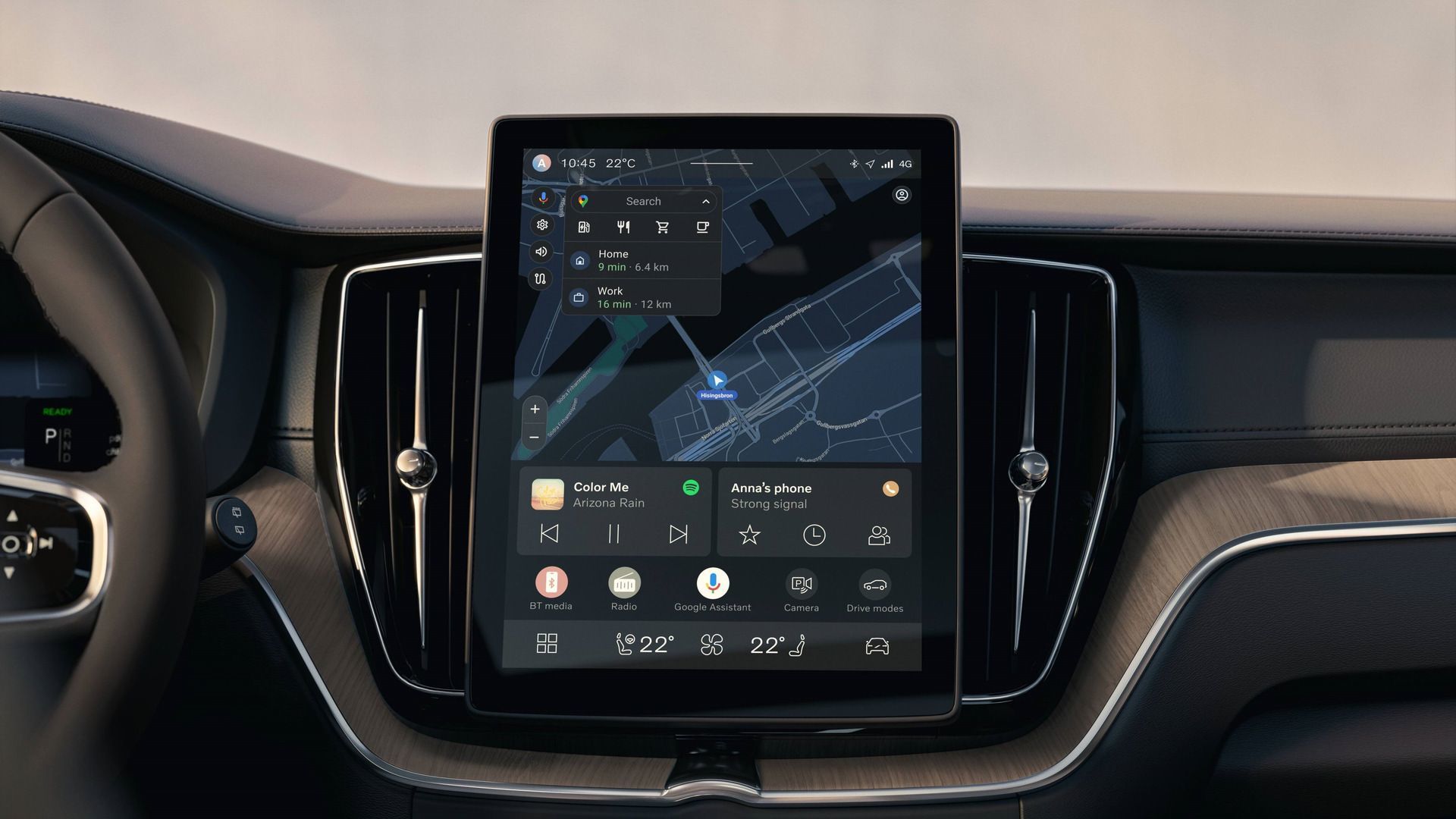
A Look at the Things Volvo's Voice Assistant Can Do
Talking to your car sounds like something out of a movie, but it has quietly become one of the more useful parts of driving a modern Volvo. Between...
Read morePowered and developed by
