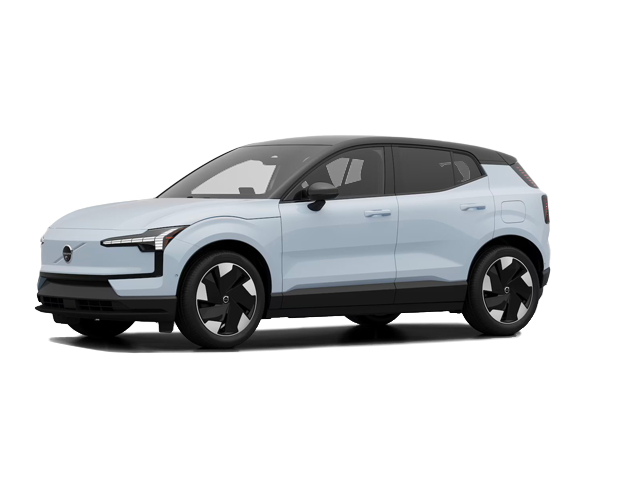
Photo for illustrative purposes only.
Find out moreVolvo Cars Mississauga


Every current Volvo model includes Google built-in as standard equipment, integrating Google Maps, Google Assistant, and Google Play directly into the vehicle's operating system. This technology differs fundamentally from phone-projection systems like Apple CarPlay or Android Auto, which mirror a smartphone's display onto the vehicle's screen.
For Hamilton drivers, the distinction carries practical implications. Google built-in operates independently with its own cellular connection and processing power, eliminating the need for a phone connection to access navigation, voice commands, or streaming apps. Understanding how this system functions, what it costs beyond the initial purchase, and how it coexists with other connectivity options helps buyers make informed decisions about their vehicle's technology.
How Google Built-in Differs from CarPlay and Android Auto
Apple CarPlay and Android Auto function as phone-mirroring systems. When a smartphone connects to the vehicle via USB cable or wireless connection, the phone's interface appears on the vehicle's display. The phone handles all processing, data connectivity, and application functions. The vehicle's screen acts essentially as an external monitor controlled by the phone.
Google built-in operates independently of any phone. The vehicle contains its own computing hardware running an automotive-specific version of Android. This system has its own cellular data connection, GPS receiver, and application ecosystem. Navigation, voice commands, and streaming services function without a phone present in the vehicle.
This architectural difference produces several practical distinctions. With CarPlay or Android Auto, navigation relies on the phone's GPS and data connection. If the phone's battery depletes or the connection drops, navigation stops. With Google built-in, the vehicle's integrated systems continue functioning regardless of phone status.
The integrated approach also enables tighter connection between navigation and vehicle systems. Google Maps in a 2026 Volvo can display range estimates for electric models, suggest charging stops based on battery status, and send destinations directly to the vehicle when planned on a computer or phone. Phone-based navigation systems lack this depth of vehicle integration.
Core Google Services and Their Functions
Google Maps Navigation
The navigation system in 2026 Volvo models provides turn-by-turn directions with real-time traffic data. The system updates routes automatically when traffic conditions change, redirecting around congestion on Highway 403 or the QEW. Voice guidance announces upcoming turns, lane suggestions, and arrival times.
For electric Volvo models (EX30, EX40, EC40), Google Maps integrates with the battery management system. The navigation calculates whether the current charge level is sufficient to reach the destination. If charging is required en route, the system suggests compatible charging stations along the route, estimates charging time needed, and updates arrival time accordingly.
The system stores map data locally in the vehicle, allowing basic navigation to function even without cellular data connection. However, real-time traffic, business information, and route optimization require active data connectivity.
Google Assistant Voice Control
Voice commands activated by saying "Hey Google" or pressing the steering wheel button allow hands-free control of numerous vehicle and entertainment functions. The system processes natural language requests rather than requiring specific command syntax.
Drivers can request navigation ("Navigate to FirstOntario Centre in Hamilton"), control climate settings ("Set temperature to 21 degrees"), adjust media playback ("Skip to the next song"), send messages if a phone is connected, or query general information ("What's the weather forecast?").
The voice recognition system learns individual speech patterns over time, improving accuracy with continued use. Multiple driver profiles can be created, each with personalized voice recognition calibration.
Google Play Store Access
The vehicle includes access to a curated subset of the Google Play Store containing apps optimized for automotive use. Available categories include music streaming (Spotify, Apple Music), podcasts, audiobooks, parking payment services, and vehicle-specific applications.
Apps run natively on the vehicle's system rather than requiring a connected phone. A driver can start a Spotify playlist, leave their phone at home, and continue listening without interruption. The system downloads app updates automatically over Wi-Fi when parked, ensuring current versions without manual intervention.
The automotive version of the Play Store excludes apps inappropriate for vehicle use, such as video streaming services or apps requiring extensive screen interaction. Safety considerations limit available applications to those usable primarily through voice control or minimal touch input.
Data Connection and Subscription Requirements
Google built-in requires data connectivity to function fully. Volvo includes four years of complimentary data service with new vehicles, covering all connectivity required for navigation, voice assistant, and app usage. This includes data for music streaming, podcast downloads, and other high-bandwidth applications.
The subscription begins on the vehicle's retail delivery date and runs for four years regardless of ownership changes. If a vehicle is sold during this period, the remaining subscription time transfers to the new owner. After four years, continued access to Google services requires subscription renewal.
Without an active data subscription, the system reverts to basic functionality. Stored map data enables navigation without traffic updates, downloaded music remains accessible, and vehicle functions continue operating. However, real-time traffic, business searches, voice assistant internet queries, and app updates require an active subscription.
Volvo has not published pricing for post-complimentary period subscriptions. Industry patterns suggest monthly or annual subscription options will become available before the four-year period expires, with pricing likely aligned with competing automotive connectivity services.
Compatibility with iPhone and Apple CarPlay

The presence of Google built-in does not prevent iPhone users from using their device with the vehicle. Apple CarPlay remains available as a separate system that coexists with Google services.
When an iPhone connects to the vehicle, the driver can choose whether to use Google built-in or switch to CarPlay. The selection determines which navigation system appears on the display, which voice assistant responds to commands, and which app ecosystem is accessible. Both systems share the same speakers, displays, and control interfaces.
This flexibility allows iPhone users to maintain their existing workflow. Contacts, messages, and iPhone-specific apps like Apple Music or Apple Podcasts function through CarPlay. Alternatively, users can remain with Google built-in and access many of the same services through their Google accounts, independent of which phone they carry.
The system remembers the last-used interface for each connected device. An iPhone user who prefers CarPlay will see CarPlay activate automatically upon connection. A family member with an Android phone using Google built-in will see that interface when their device connects.
Privacy and Data Handling
Using Google services in a vehicle raises questions about data collection and privacy. Google collects information to provide navigation, voice recognition, and personalized services. This includes location data, voice recordings, search queries, and app usage patterns.
Users can access privacy controls through the vehicle's settings menu and through their Google account on any device. Location history can be disabled, voice recordings can be set to auto-delete after a specified period, and personalized ad targeting can be restricted. These settings synchronize across all devices using the same Google account.
The vehicle itself does not store identifying information in a form accessible to subsequent owners. Before selling a vehicle, drivers can perform a factory reset that removes all personal data, signed-in accounts, and stored information from the system. This returns the vehicle to its delivery state, ready for the new owner to set up with their own accounts.
Volvo states that vehicle location and usage data collected through Google built-in is not shared with Volvo without explicit user consent. Google's data collection practices follow their standard terms of service, which users agree to when signing into a Google account on the vehicle.
Setting Up and Using Multiple Driver Profiles
The 2026 Volvo infotainment system supports multiple driver profiles, each maintaining separate preferences for Google account, navigation history, seat position, climate settings, and audio preferences. When a driver enters the vehicle, they can select their profile from the vehicle's display or use their phone as a digital key that automatically loads their profile.
Each profile maintains its own Google account connection, meaning navigation history, saved locations, and media preferences remain separate between family members sharing a vehicle. Calendar appointments, frequent destinations, and voice recognition calibration are profile-specific.
The primary owner profile has administrative access, allowing them to create additional profiles, set restrictions on guest profiles, and manage which features are available to each user. This enables parents to create restricted profiles for young drivers with limited app access or speed alerts.
Common Questions and Misconceptions
Does Google built-in work without a Google account?
Yes, but with limited functionality. Core vehicle functions, basic navigation using stored maps, and media playback from USB or Bluetooth function without signing into a Google account. However, voice assistant, real-time traffic, app downloads, and personalized features require account sign-in.
Can I use Google built-in if I don't have a smartphone?
Yes. Google built-in operates independently of any phone. Users can control the system through voice commands and the touchscreen without any connected device. Phone-dependent features like message dictation or call handling obviously require a connected phone, but navigation and entertainment function autonomously.
Does using Google built-in consume my phone's data?
No. The vehicle has its own cellular connection and data plan included for the first four years. Phone data is not used when the vehicle's Google system operates. If using CarPlay or Android Auto instead, the phone's data connection is used.
What happens after four years if I don't renew the subscription?
The system continues functioning with reduced capabilities. Basic navigation using stored maps works, downloaded content remains accessible, and vehicle functions operate normally. Real-time traffic, voice assistant internet queries, app updates, and streaming services stop functioning until subscription renewal.
Can I switch between Google built-in and CarPlay while driving?
Yes, though the vehicle must be connected to the desired phone. Accessing the home screen allows switching between interfaces through a menu option. Safety considerations suggest making this selection before driving begins rather than while moving.
Key Takeaways
Learn More at Volvo Cars Hamilton
The integration of Google services into 2026 Volvo vehicles changes how drivers interact with navigation, entertainment, and vehicle controls. Our team in Hamilton can demonstrate the system's capabilities, explain setup procedures, and clarify how Google built-in fits into your existing technology ecosystem and daily driving routine.
Photo for illustrative purposes only.
Find out more
Why Choose the 2027 Volvo XC40 for Urban Drivers
City driving asks a lot of a vehicle. Parking spots are tight, traffic stops and starts, and cyclists and pedestrians share every block. A good...
Read more
What the Cross Country Name Brings to the Volvo EX30, V60, and EX60
Volvo introduced its first Cross Country model in 1997. The idea was simple: take a comfortable Volvo, raise it, protect it, and give it the...
Read more
How You Can Prepare Your Volvo for Winter
The first cold morning of the season always seems to arrive early. One day the roads are dry, and the next there is frost on the windshield and...
Read morePowered and developed by
