
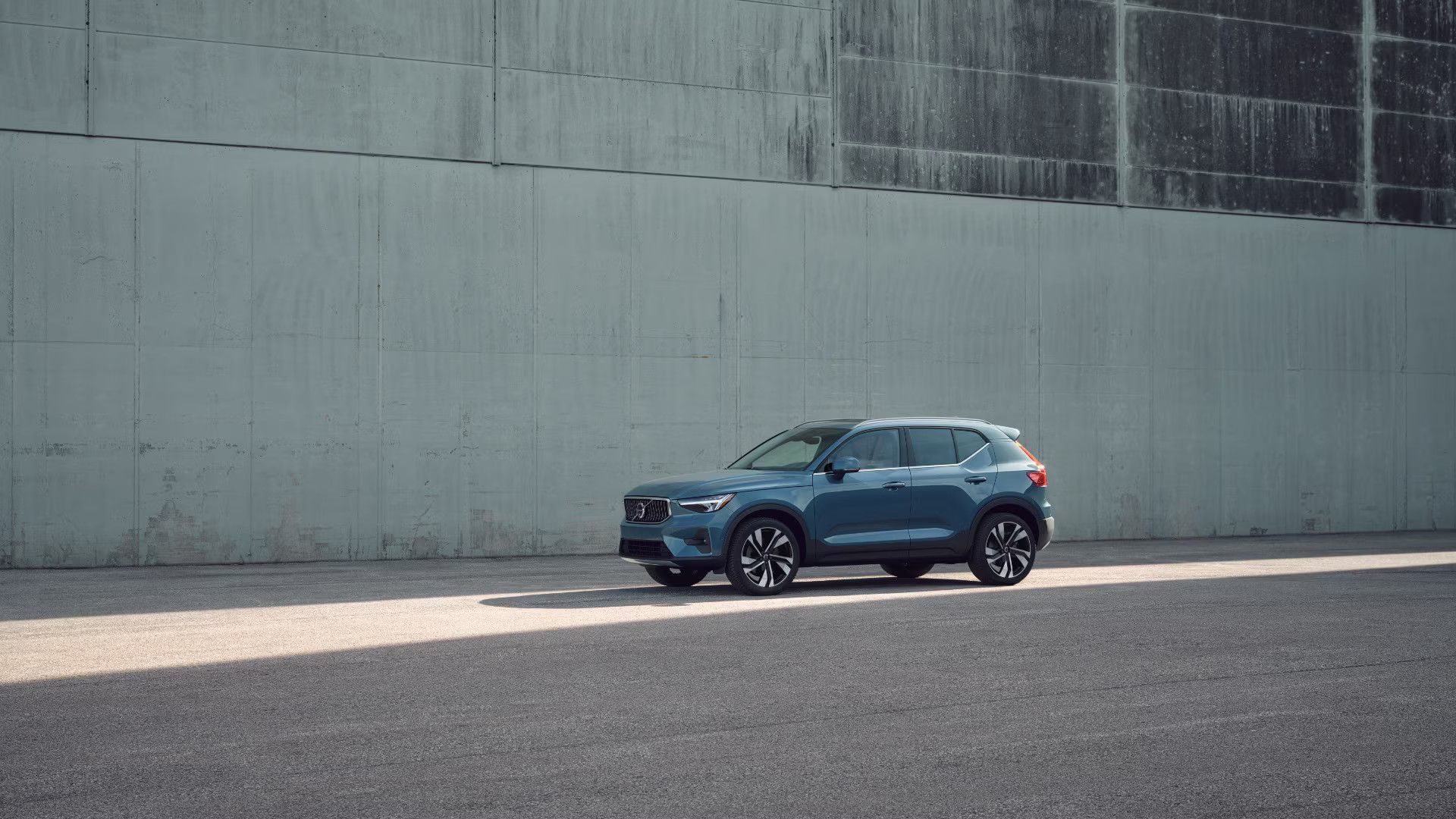
Why Choose the 2027 Volvo XC40 for Urban Drivers
City driving asks a lot of a vehicle. Parking spots are tight, traffic stops and starts, and cyclists and pedestrians share every block. A good...
Read moreVolvo Cars Mississauga
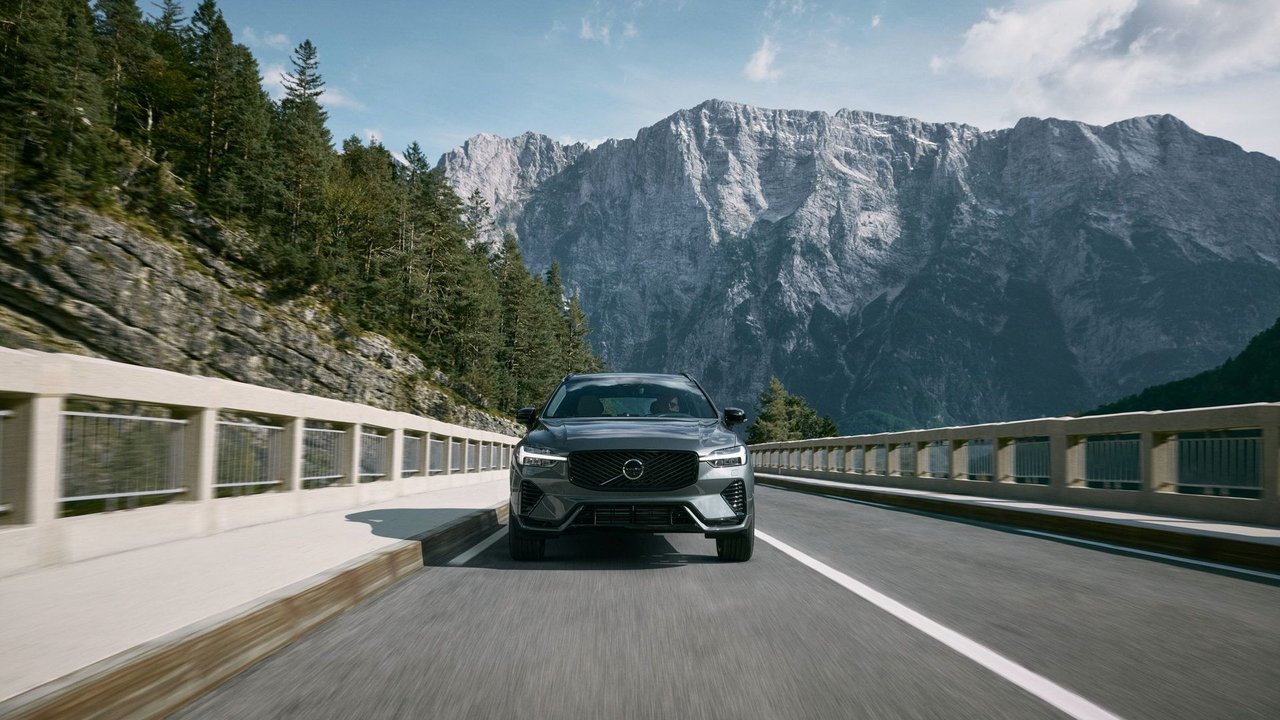
Safety has been Volvo's calling card since the company invented the three-point seatbelt in 1959 and made the patent freely available to the entire automotive industry. That commitment continues in the 2026 lineup, where every SUV—from the compact EX30 to the flagship EX90—integrates advanced collision avoidance, driver assistance, and protective systems. For Ontario drivers navigating everything from congested Highway 401 traffic to icy rural roads, these five key features define Volvo's approach to modern vehicle safety.
Volvo's safety philosophy centers on prevention first, protection second. The brand aims to eliminate serious injuries and fatalities in new Volvo vehicles through a combination of sensors, artificial intelligence, and decades of crash research. Here's how that philosophy translates into real-world protection for drivers in Mississauga and across Ontario.
BLIS with Steering Support
Blind Spot Information System (BLIS) has evolved beyond simple warning lights in your mirrors. Volvo's 2026 implementation adds active steering support that gently adjusts your vehicle's trajectory if you begin changing lanes while another vehicle occupies your blind spot.
Radar sensors monitor the zones alongside and behind your vehicle. When BLIS detects a car, truck, or motorcycle in your blind spot, an illuminated icon appears in the corresponding side mirror. If you activate your turn signal and begin steering toward that occupied zone, the system applies subtle counter-steering to guide you back toward the center of your lane.
This intervention feels natural rather than intrusive. The steering assist is gentle enough that you can override it, but firm enough to catch your attention. On Ontario's multi-lane highways, where transport trucks and fast-moving traffic create challenging blind spots, BLIS with steering support provides an extra layer of awareness.
Every 2026 Volvo SUV includes BLIS as standard equipment. The system activates automatically once you exceed approximately 10 km/h and operates at speeds up to 180 km/h.
Cross Traffic Alert with Autobrake
Backing out of parking spaces with obstructed sightlines—common in Ontario shopping centers and underground parking garages—tests even experienced drivers. Cross Traffic Alert addresses this challenge by monitoring the space behind your vehicle for approaching traffic.
Rear-mounted radar sensors scan up to 30 meters in each direction as you reverse. If a vehicle approaches from either side while you're backing up, Cross Traffic Alert sounds an audio warning and displays a visual alert on the center screen. If you don't respond and a collision becomes imminent, the system automatically applies the brakes.
The autobrake function activates between approximately 1-15 km/h in reverse. It can prevent low-speed collisions with vehicles traveling up to 36 km/h across your path. This proves valuable in scenarios where a car rounds a corner into your backing path faster than you can react.
Cross Traffic Alert pairs with Volvo's 360° camera system (available on most trims) to provide comprehensive awareness. The four-camera setup displays a bird's-eye view of your vehicle's surroundings, making tight parking maneuvers more confident.
Oncoming Lane Mitigation
Head-on collisions typically produce the most severe outcomes due to the combined speed of both vehicles. Volvo's Oncoming Lane Mitigation works to prevent these scenarios by monitoring lane markings and oncoming traffic.
The system uses the windshield-mounted camera to track lane position. If your vehicle begins drifting across the center line into the path of oncoming traffic, Oncoming Lane Mitigation provides steering assistance to guide you back into your lane. The intervention increases in urgency based on the proximity and speed of approaching vehicles.
This feature activates at speeds between approximately 60-140 km/h—the range where unintentional lane departure poses the greatest risk. It's particularly valuable on rural Ontario highways with minimal shoulder space and during winter conditions when snow can obscure lane markings.
Oncoming Lane Mitigation operates as part of Volvo's Lane Keeping Aid system, which also provides steering assistance to keep you centered within marked lanes on highways. Both functions work subtly in the background until intervention becomes necessary.
City Safety with Pedestrian, Cyclist, and Large Animal Detection

Volvo's City Safety collision avoidance system represents the core of the brand's preventive safety approach. It combines radar and camera inputs to detect vehicles, pedestrians, cyclists, and large animals (such as moose or deer common in Ontario's rural areas), then warns you and brakes automatically if you don't respond.
The system operates day and night across a wide speed range. At lower speeds (under 60 km/h), City Safety can prevent collisions entirely. At higher speeds, it works to reduce impact severity by scrubbing off as much speed as possible before contact.
City Safety's detection capabilities cover several scenarios. It recognizes pedestrians stepping into crosswalks, cyclists riding alongside your vehicle, and vehicles stopped ahead in traffic. The large animal detection uses the radar's signature analysis to identify moose and deer on the road, then provides emergency braking if needed.
For pedestrians and cyclists, City Safety adds intersection assistance. If you're turning left across oncoming traffic and a pedestrian or cyclist enters your path, the system applies the brakes. This addresses one of the most common urban collision scenarios.
Pilot Assist
Pilot Assist handles steering, acceleration, and braking on well-marked roads, reducing driver workload during highway cruising or stop-and-go traffic. While it's categorized as a driver assistance feature rather than pure safety equipment, its ability to maintain consistent lane position and following distance contributes to overall safety.
The system activates at speeds from 0-180 km/h on roads with clear lane markings. Below 60 km/h, Pilot Assist can operate without a vehicle ahead. Above 60 km/h, it requires a lead vehicle to follow. The driver must keep hands on the wheel—a capacitive sensor verifies this every few seconds.
Pilot Assist excels during long commutes on Ontario highways. It centers your vehicle in the lane, adjusts speed to maintain a safe following distance from traffic ahead, and smoothly handles gentle curves. The system won't navigate sharp turns or execute lane changes autonomously, but it reduces the fatigue associated with monotonous highway driving.
During stop-and-go traffic on routes like the QEW or Highway 401, Pilot Assist manages acceleration and braking while keeping you centered in your lane. This level of assistance makes rush hour commutes around Mississauga less taxing.
How These Systems Work Together
Volvo's safety features don't operate in isolation. They share sensor data and coordinate responses to provide comprehensive protection. The forward-facing radar, windshield-mounted camera, and corner-mounted radar units feed information to a central processing unit that makes decisions in milliseconds.
This integration allows the vehicle to respond appropriately to complex situations. If City Safety detects a pedestrian in your path while BLIS monitors your blind spots and Oncoming Lane Mitigation tracks your lane position, all systems work together to help you avoid collisions from multiple angles.
The 2026 Volvo SUV lineup applies this safety technology consistently across models. The compact EX30, mid-size XC60, and flagship EX90 all include these core features as standard or available equipment, ensuring Ontario families benefit from the same protective systems regardless of which model they choose.
Key Safety Features at a Glance
|
Feature |
Function |
Speed Range |
|---|---|---|
|
BLIS with Steering Support |
Blind spot monitoring with active lane-keeping |
10-180 km/h |
|
Cross Traffic Alert |
Detects crossing traffic when reversing |
1-15 km/h (reverse) |
|
Oncoming Lane Mitigation |
Prevents head-on collisions |
60-140 km/h |
|
City Safety |
Automatic braking for obstacles ahead |
4-180 km/h |
|
Pilot Assist |
Adaptive cruise with lane centering |
0-180 km/h |
Learn More at Volvo Cars Mississauga
Safety technology advances rapidly, and experiencing these systems firsthand clarifies how they function in real-world driving. Our team at Volvo Cars Mississauga can demonstrate each feature and explain how they adapt to Ontario's specific driving conditions—from winter weather to urban traffic patterns. Visit us in Mississauga to explore the 2026 Volvo SUV lineup and see how these safety innovations protect you and your passengers.
Why Choose the 2027 Volvo XC40 for Urban Drivers
City driving asks a lot of a vehicle. Parking spots are tight, traffic stops and starts, and cyclists and pedestrians share every block. A good...
Read more
What the Cross Country Name Brings to the Volvo EX30, V60, and EX60
Volvo introduced its first Cross Country model in 1997. The idea was simple: take a comfortable Volvo, raise it, protect it, and give it the...
Read more
How You Can Prepare Your Volvo for Winter
The first cold morning of the season always seems to arrive early. One day the roads are dry, and the next there is frost on the windshield and...
Read morePowered and developed by
