
Why Choose the 2027 Volvo XC40 for Urban Drivers
City driving asks a lot of a vehicle. Parking spots are tight, traffic stops and starts, and cyclists and pedestrians share every block. A good...
Read moreVolvo Cars Mississauga
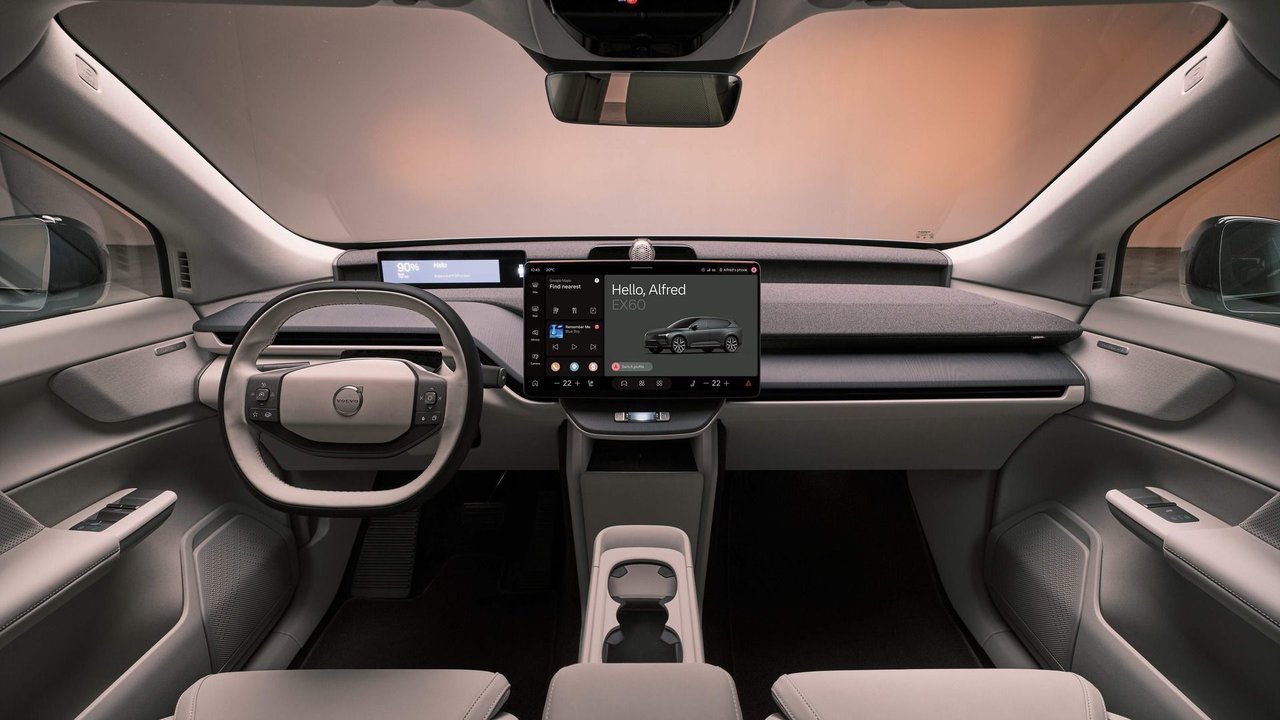
Every current Volvo model sold in Canada includes Google built-in as standard equipment. Google Maps provides real-time navigation, Google Assistant responds to voice commands, and Google Play offers access to apps directly through the vehicle's infotainment screen. For most drivers, this system handles the essentials well — directions, music, hands-free calls. But the 2027 Volvo EX60, set to begin Canadian deliveries of the P10 variant by fall 2026, introduces something fundamentally different: Google Gemini.
Gemini is Google's AI assistant, and the EX60 is the first Volvo — and one of the first vehicles from any manufacturer — to integrate it directly into the vehicle's infotainment system. For Mississauga drivers who have grown accustomed to Google Assistant's command-and-response format, Gemini changes the interaction model. It is designed for natural, multi-turn conversations that feel closer to speaking with a knowledgeable passenger than issuing instructions to a computer.
How Gemini Differs from Google Assistant
Google Assistant, which is standard across the current Volvo lineup (XC40, XC60, XC90, EX30, EX40, EC40, EX90), works on a command-based model. You say a specific phrase — "Hey Google, navigate to Square One Shopping Centre" — and the system executes the command. It handles single-step tasks well: setting a destination, playing a song, adjusting the climate. But if you want to ask a follow-up question or layer additional context into the request, you typically need to start a new command from scratch.
Gemini moves beyond that pattern. It supports multi-turn conversation, which means it can maintain context across a series of related questions. You can start with a broad request, refine it with follow-up details, and receive responses that build on what you have already discussed — all without repeating background information or re-triggering the system with a wake word each time.
The distinction matters most during complex tasks. Planning a road trip, for example, involves multiple variables: distance, charging stops, timing, weather, points of interest. With a command-based assistant, each of those variables requires a separate, standalone query. Gemini can handle them as a connected conversation, where each question builds on the one before it.
Practical Examples: What Gemini Can Do on the Road
Volvo's press materials describe Gemini as being "deeply integrated" with the EX60, allowing "natural and personalized conversations without having to remember specific commands." Here is what that looks like in practical driving scenarios relevant to Mississauga and Ontario:
Trip Planning
A driver leaving Mississauga for a weekend in Prince Edward County could ask Gemini to suggest a route, estimate driving time, and identify fast-charging stations along the way. If the driver then asks, "What about stopping for lunch near Kingston?" Gemini can incorporate that into the same conversation without needing to restart the query. The AI retains the context of the trip — the origin, destination, timing — and adds the new variable on top.
Packing and Logistics
Volvo has highlighted the EX60's ability to help analyze packing lists. A driver could describe what they are bringing on a trip and ask Gemini to confirm it will fit, suggest what might be missing, or provide recommendations based on the destination and weather. This type of open-ended interaction is outside the scope of traditional voice assistants, which require structured commands rather than conversational input.
Real-Time Information
Because Gemini is connected to Google's broader data ecosystem, it can pull in real-time information during a conversation. A driver could ask about current road conditions, weather at a destination, or operating hours for a business — and then follow up with related questions without re-establishing context. For a Mississauga commuter navigating the 401 or 403, being able to ask "Is there a faster route right now?" and then "What about taking the QEW instead?" as a natural follow-up streamlines the process.
The Technology Behind Gemini: HuginCore

Gemini's ability to process complex, multi-turn conversations inside a moving vehicle depends on the computing power available to it. In the EX60, that computing power comes from HuginCore — Volvo's most advanced core computer system, developed in collaboration with NVIDIA and Qualcomm Technologies.
HuginCore serves as the EX60's central processing unit, handling data from the vehicle's full array of sensors, safety systems, and infotainment functions. Named after one of the ravens from Norse mythology — Huginn, representing thought — HuginCore processes input from external cameras, radar, and the vehicle's internal systems simultaneously. For Gemini specifically, this means the AI assistant has access to vehicle-level data (battery status, range, climate settings) in addition to Google's cloud-based information, allowing it to provide responses that are specific to the car and the moment.
The infotainment system built on this architecture is described by Volvo as the most responsive in any Volvo to date: screens respond quickly, maps load without delay, and voice assistants process spoken language with greater accuracy. For Mississauga drivers accustomed to the Google built-in experience in current models like the XC60 or EX30, the EX60's system is designed to feel noticeably faster and more fluid.
What Gemini Means for Volvo's Google Partnership
Volvo has been a lead development partner for Android Automotive OS for several years, and the current Google built-in system across the lineup reflects that relationship. The integration of Gemini into the EX60 marks the next stage of that partnership — moving from a command-based voice assistant to an AI that can reason, hold context, and assist with tasks that require multiple steps.
For the broader Volvo lineup, the EX60's Gemini integration signals the direction of future infotainment development. The "Superset" technology approach that Volvo uses — where innovations developed for flagship models are progressively rolled out across the range — suggests that Gemini or similar AI capabilities may eventually appear in other Volvo vehicles through over-the-air software updates. The EX60 is the first to receive it, and the technology will likely expand from there.
Key Takeaways
|
Feature |
Detail |
|---|---|
|
AI Assistant |
Google Gemini (first integration in a Volvo) |
|
Core Computer |
HuginCore (NVIDIA / Qualcomm collaboration) |
|
Conversation Model |
Multi-turn, context-retaining, natural language |
|
Current Lineup Assistant |
Google Assistant (command-based) |
|
Infotainment OS |
Android Automotive OS |
|
Additional Audio |
28-speaker Bowers & Wilkins with headrest speakers; Apple Music with Dolby Atmos |
|
Canadian Availability (P10 Variant) |
Deliveries expected fall 2026 |
|
Canadian Ordering |
Online configurations and deposits begin spring 2026 |
Learn More at Volvo Cars Mississauga
The 2027 Volvo EX60 is expected to arrive at Canadian dealerships in fall 2026, with online configurations and deposits opening this spring. If you are following the EX60's development and want to be among the first in Mississauga to experience Google Gemini in a Volvo, visit our team at Volvo Cars Mississauga to stay informed as Canadian ordering details are confirmed.
Why Choose the 2027 Volvo XC40 for Urban Drivers
City driving asks a lot of a vehicle. Parking spots are tight, traffic stops and starts, and cyclists and pedestrians share every block. A good...
Read more
What the Cross Country Name Brings to the Volvo EX30, V60, and EX60
Volvo introduced its first Cross Country model in 1997. The idea was simple: take a comfortable Volvo, raise it, protect it, and give it the...
Read more
How You Can Prepare Your Volvo for Winter
The first cold morning of the season always seems to arrive early. One day the roads are dry, and the next there is frost on the windshield and...
Read morePowered and developed by
