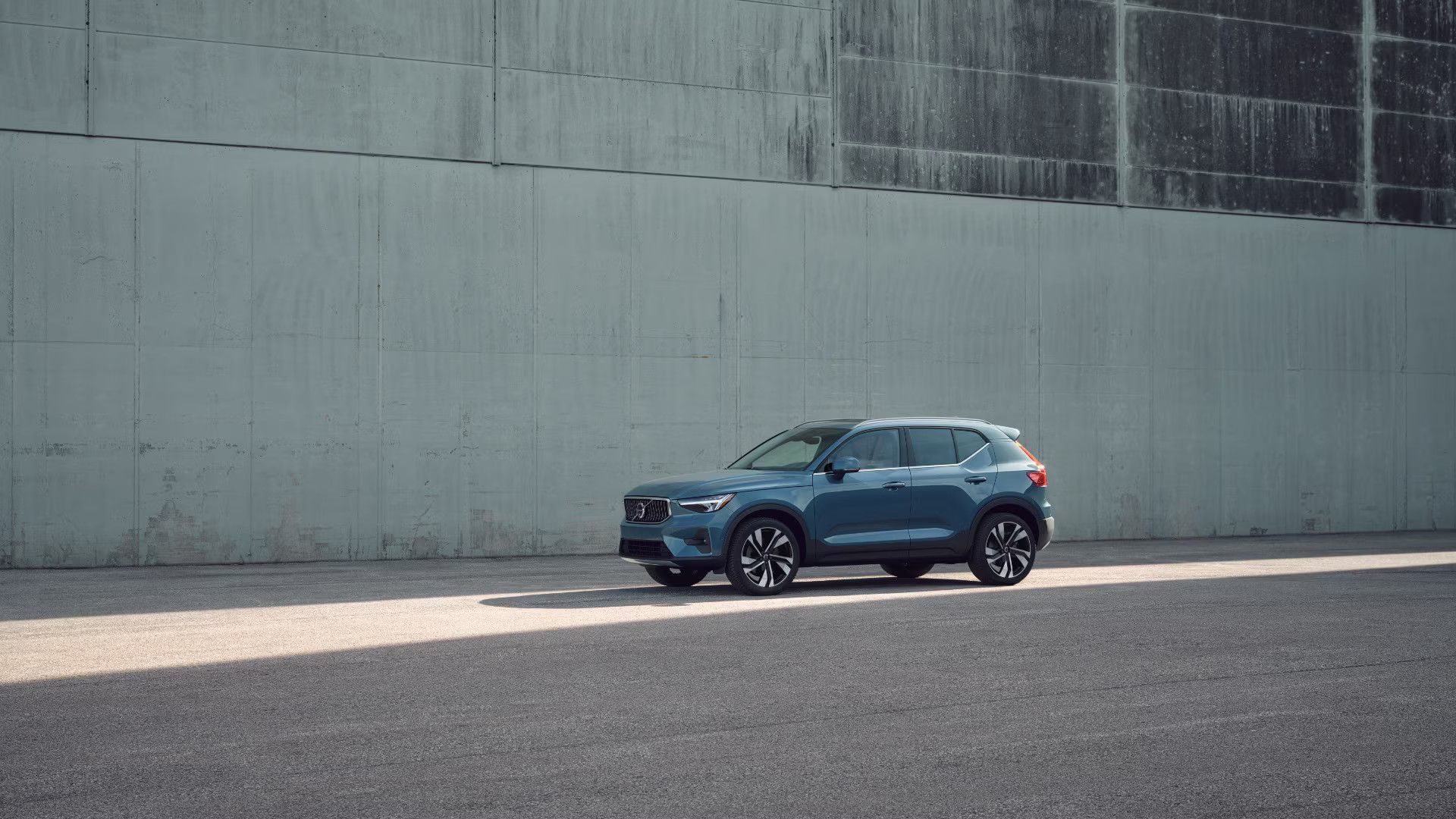
Why Choose the 2027 Volvo XC40 for Urban Drivers
City driving asks a lot of a vehicle. Parking spots are tight, traffic stops and starts, and cyclists and pedestrians share every block. A good...
Read moreVolvo Cars Mississauga


Volvo will reveal the EX60 on January 21, 2026, introducing the company's most advanced electric vehicle architecture to the mid-size SUV segment. The EX60 brings two technical achievements that address the primary obstacles preventing many Ontario drivers from adopting electric vehicles: a preliminary EPA-estimated range of 640 km and charging capability that adds 270 km of range in 10 minutes at 400 kW stations.
These specifications represent substantial improvements over Volvo's current electric lineup. The EX90, despite its larger size and higher price, achieves a maximum of 499 km of range. The EX40 reaches 476 km in Single Motor configuration. The EX60 will exceed both while maintaining a size appropriate for families who find the EX40 too small and the EX90 unnecessarily large.
Technical Foundation: SPA3 Platform and 800V Architecture
The EX60 will be built on Volvo's SPA3 platform, a completely new electric vehicle architecture that replaces the current SPA2 platform used in the XC90, XC60, and their electric derivatives. SPA3 incorporates several weight-reduction and efficiency-optimization technologies that enable the EX60's range advantage.
Cell-to-Body Construction
Traditional electric vehicles mount the battery pack as a separate assembly bolted to the vehicle's floor structure. This approach requires substantial structural reinforcement to support the battery's weight and protect it during collisions. SPA3 integrates the battery cells directly into the vehicle's floor structure, with the battery enclosure serving as a structural element rather than added mass.
This cell-to-body construction eliminates redundant structure. The battery pack doesn't require its own protective enclosure separate from the vehicle's floor, reducing total weight. Fewer components also simplify manufacturing and potentially improve long-term durability by reducing the number of joints and fasteners subject to stress and corrosion.
Megacasting Technology
Volvo will produce the EX60 using large-scale aluminum castings that replace hundreds of stamped and welded parts. The front and rear sections of the vehicle will each be formed from a single high-pressure die-cast aluminum piece, eliminating the need for dozens of smaller stamped steel components joined through spot welding.
This approach reduces weight in two ways. Aluminum is lighter than steel, and eliminating overlapping joints and fasteners removes material that exists solely to connect parts rather than provide structural strength. The single-piece castings also improve structural rigidity, allowing engineers to reduce material thickness in areas where additional strength would otherwise compensate for flex in multi-piece assemblies.
In-House Electric Motors
Volvo developed the EX60's electric motors internally rather than purchasing them from suppliers. This vertical integration allowed engineers to optimize motor efficiency specifically for the vehicle's weight, aerodynamics, and intended use patterns. The motors use a permanent magnet design, which provides higher efficiency than induction motors across a wider operating range.
The combination of reduced vehicle weight, improved aerodynamics from the optimized body structure, and more efficient motors allows the EX60 to travel further on the same battery capacity. Volvo has not disclosed the EX60's battery capacity, but the range improvement over the EX90 (which uses a 107 kWh usable battery) suggests either a larger battery, substantially improved efficiency, or both.
800V Electrical System and Charging Performance
The EX60 will introduce Volvo's first 800-volt electrical architecture, doubling the voltage of the current 400-volt system used in the EX30, EX40, EC40, and EX90. This voltage increase enables faster charging without increasing the electrical current flowing through the charging cable and vehicle wiring.
Charging power equals voltage multiplied by current. A 400-volt system charging at 400 kW draws 1,000 amps of current. An 800-volt system achieves the same 400 kW charging power with only 500 amps. Lower current reduces resistive heating in cables and connectors, improves efficiency, and allows the use of lighter, more flexible charging cables.
The practical result: the EX60 will add 270 km of range in 10 minutes when connected to a 400 kW charger. This charging speed approaches the time required for a conventional fuel stop when accounting for the time spent parking, paying, and pumping gasoline. For Mississauga drivers making trips beyond the Greater Toronto Area, this reduces charging from a significant delay to a brief interruption comparable to a coffee break.
Real-World Charging Scenarios
A Mississauga resident driving to Ottawa (approximately 450 km each way) would need one charging stop in each direction if departing with a full battery. Starting with 640 km of range, the drive to Ottawa consumes approximately 450 km, leaving 190 km remaining. A 10-minute charging stop before the return journey adds 270 km of range, providing 460 km available for the return trip—more than sufficient to reach Mississauga with margin for detours or inefficiency.
The same driver traveling to Montreal (approximately 540 km each way) would require one charge stop each way, with slightly longer charging time to reach a comfortable buffer. Starting with 640 km, the driver would arrive in Montreal with approximately 100 km remaining. A 15-minute charge adding approximately 400 km of range provides sufficient capacity for the return journey.
Winter weather reduces electric vehicle range significantly. Ontario temperatures from December through February typically decrease electric vehicle efficiency by 30-40% due to increased battery resistance, reduced regenerative braking effectiveness, and energy consumption for cabin heating. The EX60's 640 km summer range would decrease to approximately 385-450 km in typical winter conditions.
However, this reduced winter range still exceeds the EX90's summer range of 499 km and provides sufficient capacity for most Ontario travel without requiring charge stops. A Mississauga resident commuting to Toronto (approximately 60 km round trip) would complete a full work week on a single charge even in winter, assuming home charging each night.
Comparison to Current Volvo Electric Models

|
Feature |
EX60 |
EX90 |
EX40 Single Motor |
|---|---|---|---|
|
Range (EPA preliminary) |
640 km |
499 km |
476 km |
|
Electrical Architecture |
800V |
400V |
400V |
|
DC Fast Charging Peak |
400 kW (preliminary) |
250 kW |
200 kW |
|
10-80% Charge Time |
~15 min (est.) |
30 min |
28 min |
|
270 km Added Range |
10 minutes |
Not achievable |
Not achievable |
|
Seating Capacity |
5 |
6 or 7 |
5 |
|
Platform |
SPA3 |
SPA2 |
CMA |
The EX60 will occupy the space between the compact EX40 and the three-row EX90. It provides substantially more range than the EX40 while avoiding the size and price premium of the EX90. For buyers who don't need third-row seating but want maximum electric range, the EX60 will offer the optimal combination.
Breathe Battery Technologies Algorithm Integration
Volvo's press release confirmed that the EX60 incorporates algorithms developed by Breathe Battery Technologies, a company in which Volvo holds an investment stake. These algorithms optimize how the battery management system controls charging to maximize both charging speed and long-term battery health.
Conventional battery management systems use fixed charging curves that reduce charging power as the battery approaches full capacity. This conservative approach protects battery longevity but extends charging time unnecessarily in many conditions. Breathe's algorithms continuously adjust charging parameters based on current battery temperature, state of charge, cell voltage distribution, and ambient conditions.
The system maintains the battery in its optimal operating zone across a wider range of conditions. In warm weather, it allows more aggressive charging rates. In cold weather, it adjusts charging parameters to prevent lithium plating and other degradation mechanisms that occur when charging cold batteries too quickly. This adaptive approach reduces total charging time while maintaining or potentially improving long-term battery capacity retention.
For Mississauga drivers, this translates to more consistent charging performance across Ontario's temperature extremes. The EX60 will charge effectively in both July heat and January cold, with the battery management system automatically adjusting parameters to maintain both speed and longevity.
Preliminary Specifications and Final Certification
Volvo's press release emphasized that the 640 km range figure represents a preliminary estimate based on EPA testing procedures. The final certified range will be released closer to the vehicle's market availability, after completing the full EPA testing and certification process.
Several factors can affect the final certified range. Tire choice influences rolling resistance, with larger wheels and performance-oriented tires typically reducing efficiency compared to smaller wheels with low-rolling-resistance tires. Optional equipment that adds weight or changes aerodynamics can also impact range. The 640 km figure likely represents the optimal configuration with the most efficient wheel and tire combination.
Volvo's preliminary range estimates for previous models have generally proven accurate or conservative. The EX90's preliminary range estimate matched the final certified figure. The EX30 and EX40 both achieved certified ranges that met or exceeded preliminary estimates. This track record suggests the EX60's 640 km estimate represents a realistic expectation rather than an optimistic projection.
Temperature Effects
Cold weather impacts range through multiple mechanisms. Battery chemistry slows in low temperatures, reducing both available capacity and charging efficiency. Cabin heating consumes significant energy, particularly during the first 15-20 minutes of a trip while warming the interior. Denser cold air increases aerodynamic drag slightly. Tire pressure decreases in cold weather, increasing rolling resistance.
The combined effect typically reduces range by 30-40% in winter conditions common to Ontario. However, the EX60's 640 km starting point means that even with 35% winter loss, approximately 415 km remains—still more than the EX90's summer range and sufficient for most daily driving patterns in the Greater Toronto Area.
Pre-conditioning the vehicle while still connected to shore power minimizes winter range impact. The EX60 can warm both the battery and cabin using grid electricity before departure, starting the trip with an already-warm battery at full capacity and a comfortable interior that requires less energy to maintain.
When the EX60 Will Be Available
Volvo will reveal the EX60 on January 21, 2026, at a global event that will be livestreamed. This reveal will likely include final specifications, pricing, available configurations, and expected delivery timelines for various markets.
Production timing and Canadian availability have not been announced. Based on typical automotive development and production cycles, initial customer deliveries would likely begin several months after the reveal, potentially in the second or third quarter of 2026. Canadian deliveries might follow initial launches in other markets by additional months, depending on Volvo's production allocation strategy.
For Mississauga buyers currently considering the EX40 or EX90 but hesitant about range or charging speed, the decision to wait for the EX60 depends on individual circumstances. Buyers who need a vehicle immediately would benefit from the current models, which provide proven capability and immediate availability. Those who can wait several months would gain the substantial range and charging advantages the EX60 will offer.
Learn More at Volvo Cars Mississauga
The EX60 will introduce technologies that advance electric vehicle capability beyond current offerings. Our team in Mississauga can provide updates as Volvo releases additional specifications following the January 21 reveal, discuss how the EX60 compares to current models for your specific driving patterns, and explain what the new platform and charging capabilities mean for daily use in Ontario.
Why Choose the 2027 Volvo XC40 for Urban Drivers
City driving asks a lot of a vehicle. Parking spots are tight, traffic stops and starts, and cyclists and pedestrians share every block. A good...
Read more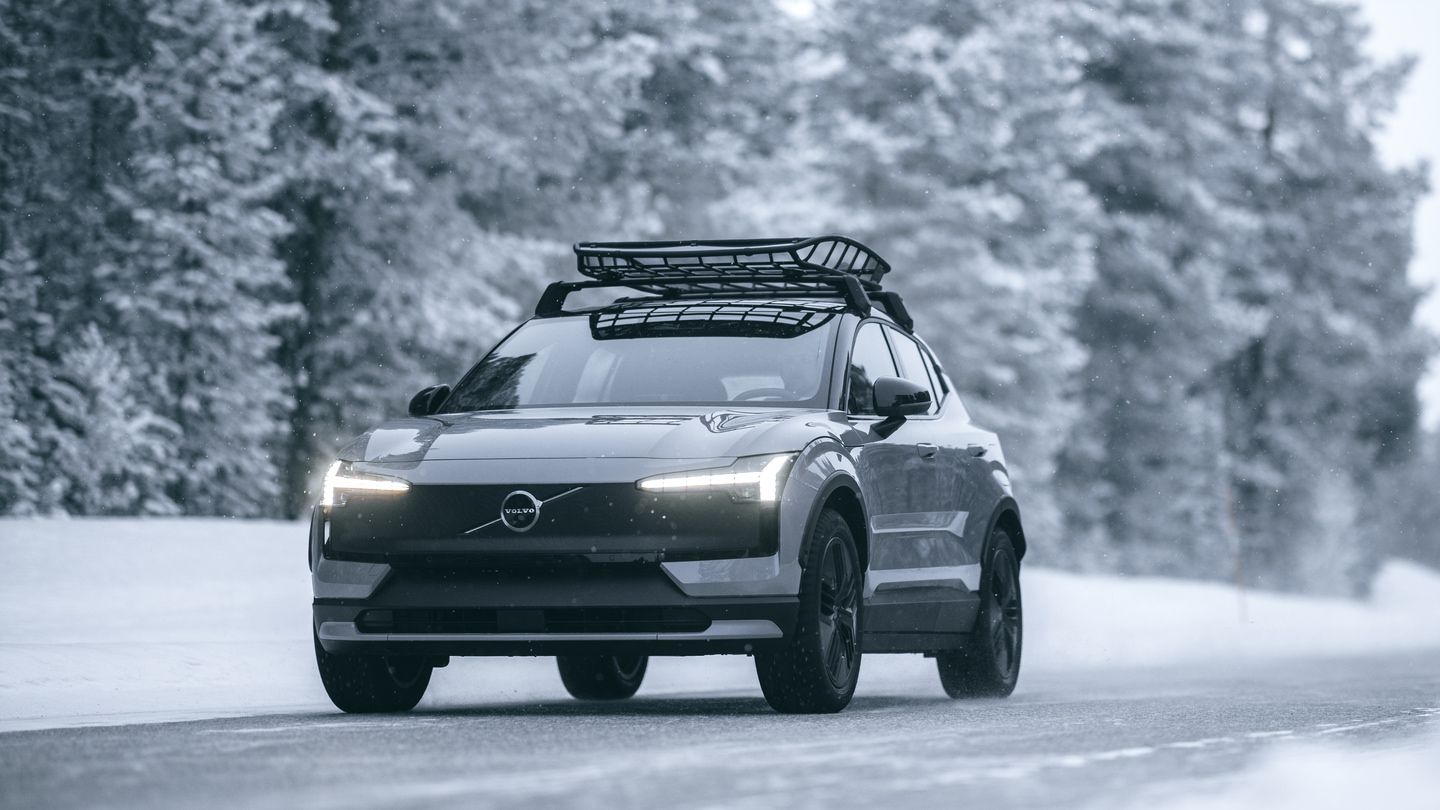
What the Cross Country Name Brings to the Volvo EX30, V60, and EX60
Volvo introduced its first Cross Country model in 1997. The idea was simple: take a comfortable Volvo, raise it, protect it, and give it the...
Read more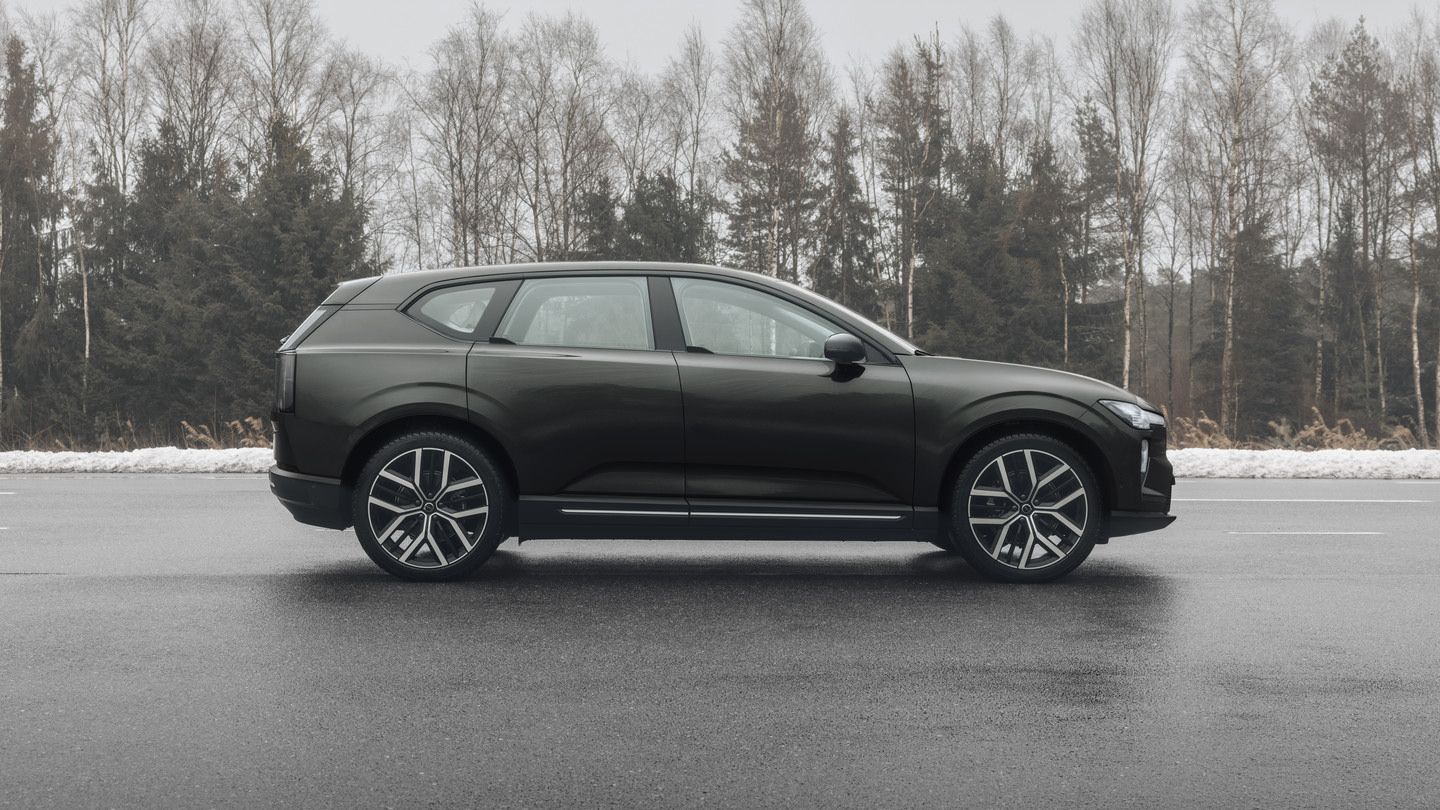
How You Can Prepare Your Volvo for Winter
The first cold morning of the season always seems to arrive early. One day the roads are dry, and the next there is frost on the windshield and...
Read morePowered and developed by
