
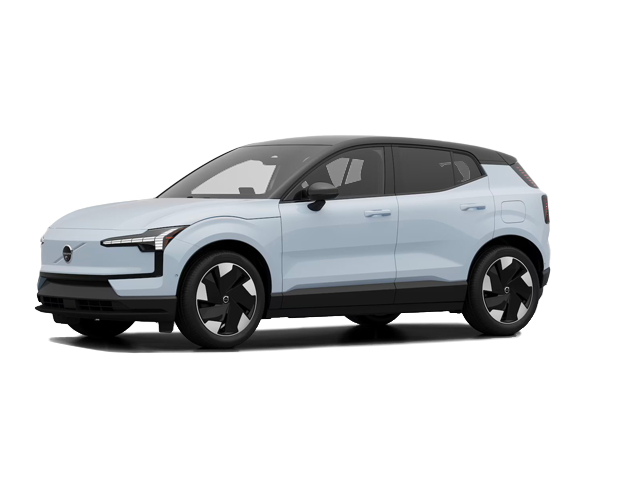
Photo for illustrative purposes only.
Find out moreVolvo Cars Mississauga
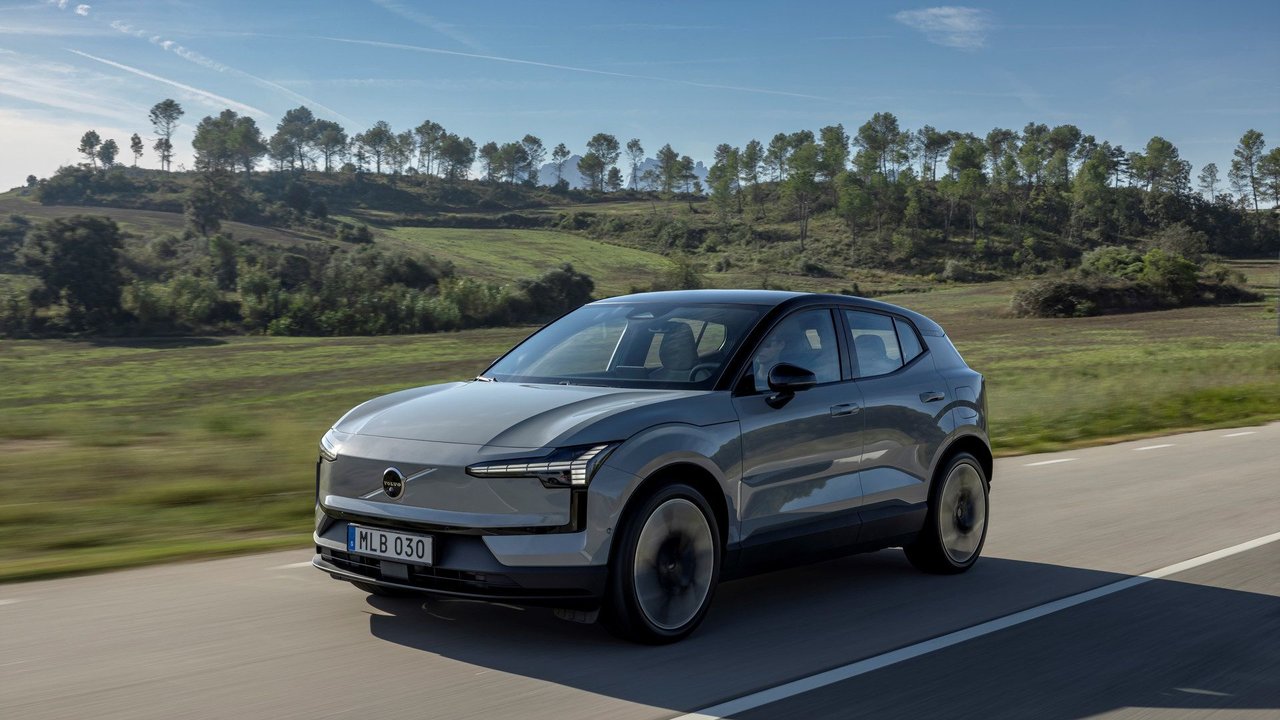
When most people evaluate the environmental impact of an electric vehicle, the conversation starts and stops at tailpipe emissions. Zero emissions while driving is a clear advantage over combustion engines, and it is the most visible benefit of going electric. But for the 2026 Volvo EX30, the environmental story runs deeper than what happens on the road. Volvo designed the EX30 to have the lowest total carbon footprint of any Volvo car to date — a claim that accounts for the full lifecycle of the vehicle, from raw material extraction through manufacturing, years of driving, and eventual end-of-life recycling.
For Mississauga drivers who want to understand what goes into that claim — and who weigh environmental responsibility as part of their purchase decision — the EX30's sustainability profile is worth examining in detail. The numbers, materials, and manufacturing choices tell a story that goes well beyond the "zero emissions" label on the window sticker.
A Lifecycle Carbon Footprint Below 30 Tonnes
Volvo's target for the EX30 was to reduce its total carbon footprint over 200,000 kilometres of driving to below 30 tonnes of CO₂ equivalent. That figure accounts for every phase of the vehicle's existence: mining and processing the materials used in the battery, body, and interior; the energy consumed during manufacturing; the electricity used to charge the vehicle over its lifetime; and the emissions associated with recycling or disposing of the vehicle at end of life.
For context, the average gasoline-powered compact SUV produces roughly 35 to 50 tonnes of CO₂ over a comparable driving distance from tailpipe emissions alone — before factoring in manufacturing and material sourcing. The EX30's sub-30-tonne figure includes all of those upstream and downstream stages, which makes the comparison even more striking.
This calculation is based on charging with the EU27 electricity mix. In Ontario, where a large share of electricity comes from nuclear and hydroelectric sources, the real-world carbon footprint of charging an EX30 is likely lower still. Mississauga drivers charging at home on Ontario's grid can expect their per-kilometre emissions to fall well below the European average used in Volvo's official calculations.
Key Takeaways
|
Environmental Metric |
Volvo EX30 |
|---|---|
|
Total Lifecycle CO₂ (over 200,000 km) |
Below 30 tonnes |
|
Calculation Basis |
EU27 electricity mix |
|
Comparison: Average Gasoline Compact SUV (Tailpipe Only) |
~35–50 tonnes CO₂ |
|
Cabin Materials |
Recycled and bio-attributed |
|
Battery Chemistry |
NMC (Nickel, Manganese, Cobalt) |
|
Battery Capacity (Usable) |
65 kWh |
|
Estimated Range — Single Motor (EPA, 19"/20" wheels) |
420 km |
|
Estimated Range — Twin Motor (EPA) |
402 km |
Materials: Recycled Content Inside and Out

Reducing the carbon footprint of a vehicle requires rethinking the materials that go into it. Volvo took a deliberate approach with the EX30, incorporating recycled and bio-attributed materials throughout the cabin and body.
The interior offers four distinct design themes, each using a carefully selected mix of materials that reduce reliance on virgin resources. Recycled plastics, bio-attributed textiles, and responsibly sourced metals appear throughout the dashboard, door panels, and seat surfaces. The approach is consistent with Volvo's broader goal of increasing the percentage of recycled and renewable content across its entire lineup — an effort that extends to the EX90 and the upcoming EX60 as well.
On the body side, Volvo has worked to increase the share of recycled aluminum and steel in the EX30's structure. These choices reduce the energy required during production, since recycled metals demand far less energy to process than newly mined ore. The lighter overall weight also contributes to the vehicle's energy efficiency on the road, extending range per kilowatt-hour consumed.
The EX30's compact dimensions play a role here too. At 4,233 mm long and 1,837 mm wide, the EX30 uses less raw material than larger SUVs — fewer kilograms of steel, aluminum, and plastic in the body structure, and a smaller battery pack (69 kWh nominal / 65 kWh usable) than the EX40 (82 kWh) or EX90 (111 kWh). Less material in production means less energy consumed before the vehicle reaches the road.
Battery Chemistry and Energy Efficiency
The EX30 uses an NMC (nickel, manganese, cobalt) lithium-ion battery across both variants. NMC chemistry offers a strong balance between energy density, longevity, and thermal stability — which means the battery stores more energy per kilogram and maintains its capacity over more charge cycles than some alternative chemistries.
Energy consumption figures reinforce the efficiency story. The Single Motor Extended Range variant consumes 18.1 kWh per 100 km (EPA combined, with 19- or 20-inch wheels), while the Twin Motor Performance variant uses 2.2 Le/100 km combined. Those figures are among the lowest in the compact electric SUV segment, and they translate directly to lower charging costs and fewer kilowatt-hours drawn from the grid over the vehicle's lifetime.
For Mississauga drivers, lower energy consumption also means more practical range between charges. The Single Motor achieves an estimated 420 km (EPA, 19"/20" wheels), while the Twin Motor reaches 402 km. On Ontario's relatively flat highway corridors — the 401, the 403, the QEW — efficient energy use at cruising speed stretches that range further than in hillier or colder climates.
Reduced Service Requirements
One environmental benefit of electric vehicles that is often overlooked is the reduction in ongoing maintenance. The EX30 has fewer moving parts than a combustion-powered SUV — no engine oil to change, no transmission fluid, no exhaust system components to replace. This means fewer service visits, fewer replacement parts manufactured and shipped, and less waste generated over the vehicle's ownership period.
Volvo specifically notes that the EX30 "does not have to undergo conventional service as often" compared to its combustion-powered counterparts. For Mississauga owners, that translates to lower long-term ownership costs and a smaller environmental footprint beyond the vehicle itself.
How the EX30 Fits Into Volvo's Broader Sustainability Roadmap
The EX30's sub-30-tonne lifecycle target is part of a larger corporate goal. Volvo aims to achieve net-zero greenhouse gas emissions by 2040. The EX30 and the upcoming EX60 are designed to match each other as the lowest-carbon-footprint fully electric vehicles in the Volvo lineup, with each successive model generation pushing the figure lower through improvements in manufacturing, battery technology, and material sourcing.
Volvo has also invested in circular economy practices — designing vehicles so that materials can be recovered and reused at end of life, rather than sent to landfill. The increasing use of recycled content in current models is an early step in that direction, and the EX30 serves as a proof point for how far the approach has progressed.
For Mississauga drivers who view vehicle ownership through an environmental lens, the EX30 offers a tangible, data-backed answer to the question of total impact. It is not a vehicle that relies on the "zero emissions" label alone. The sustainability case is built into the materials, the manufacturing, the battery, and the efficiency of every kilometre driven.
Learn More at Volvo Cars Mississauga
If the EX30's environmental story is part of what draws you to the vehicle, our team at Volvo Cars Mississauga can share more about the materials, charging options, and ownership experience. Visit our Mississauga dealership to see the EX30 in person and learn how it fits into your approach to more responsible driving.
Photo for illustrative purposes only.
Find out more
Why Choose the 2027 Volvo XC40 for Urban Drivers
City driving asks a lot of a vehicle. Parking spots are tight, traffic stops and starts, and cyclists and pedestrians share every block. A good...
Read more
What the Cross Country Name Brings to the Volvo EX30, V60, and EX60
Volvo introduced its first Cross Country model in 1997. The idea was simple: take a comfortable Volvo, raise it, protect it, and give it the...
Read more
How You Can Prepare Your Volvo for Winter
The first cold morning of the season always seems to arrive early. One day the roads are dry, and the next there is frost on the windshield and...
Read morePowered and developed by
