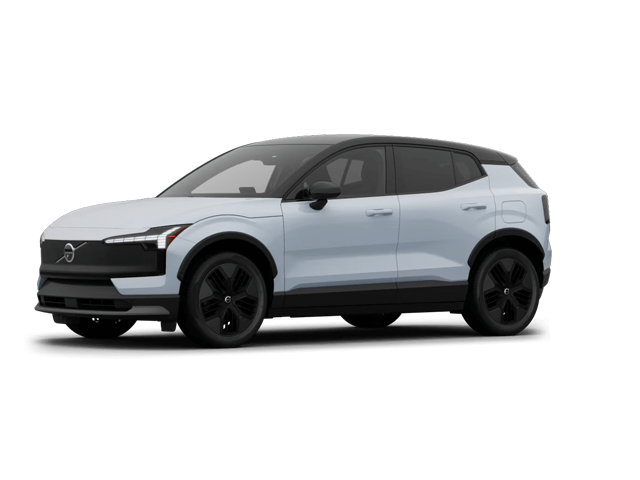
Photo for illustrative purposes only.
Find out moreVolvo Cars Mississauga

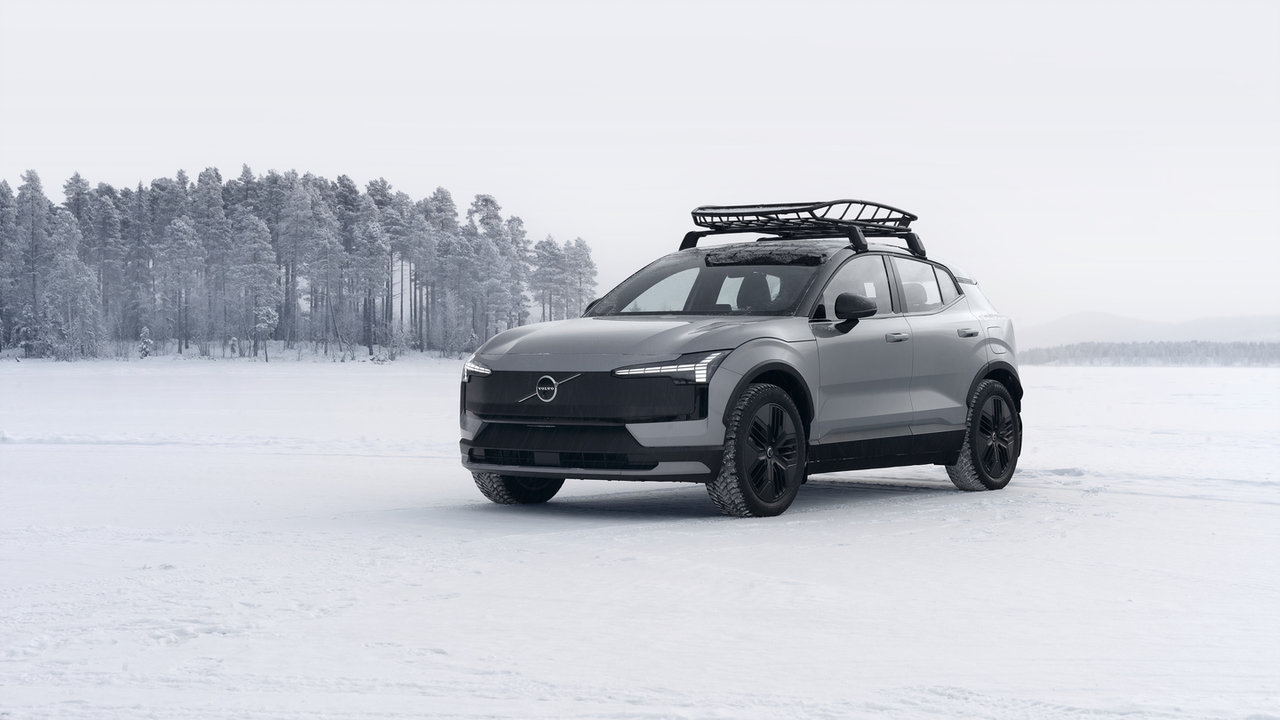
The 2026 Volvo EX30 lineup in Canada now includes five configurations: Core Single Motor, Plus Single Motor, Plus Dual Motor, Ultra Single Motor, Ultra Dual Motor, and the Cross Country. For Mississauga buyers who have narrowed their search to the EX30, the most common question at this stage is specific: what exactly does the Cross Country add over the standard Twin Motor, and is it worth it for the way I actually drive?
The answer depends on how often you leave paved roads and how much you value the additional ground clearance and underbody protection that the Cross Country provides. Both vehicles share the same Dual Motor AWD powertrain, the same 422-horsepower output, and the same 69-kWh battery. The differences are concentrated in ride height, exterior protection, and design. Here is a detailed look at what separates them.
At a Glance: EX30 Cross Country vs. EX30 Twin Motor
|
Specification |
EX30 Cross Country |
EX30 Twin Motor Performance |
|---|---|---|
|
Drivetrain |
Dual Motor AWD |
Dual Motor AWD |
|
Horsepower |
422 hp |
422 hp |
|
Torque |
400 lb-ft |
400 lb-ft |
|
0–100 km/h |
3.6 sec |
3.6 sec |
|
Battery (nominal / usable) |
69 kWh / 65 kWh |
69 kWh / 65 kWh |
|
EPA range |
~402 km |
~402 km |
|
Ground clearance |
196 mm |
177 mm |
|
Skid plates |
Front, rear, and side |
— |
|
Matte black wheel arches |
✓ |
— |
|
Topographic front shield |
✓ |
— |
|
Cross Country branding |
✓ |
— |
|
Hood-mounted Swedish flag |
✓ |
— |
|
Ontario price |
$52,919 |
$52,919 (Ultra DM) |
|
Federal iZEV incentive |
Not eligible (over $50,000) |
Not eligible (over $50,000) |
Ground Clearance: 196 mm vs. 177 mm
The most functionally important difference between the Cross Country and the standard Twin Motor is ground clearance. The Cross Country sits at 196 mm — a 19-mm increase over the standard EX30's 177 mm. That gap may sound small on paper, but it has practical consequences on the types of surfaces the vehicle can handle without risk of scraping.
At 177 mm, the standard EX30 is well-suited for paved roads, well-maintained gravel, and the kind of flat terrain typical of Mississauga's residential streets and commercial parking lots. At 196 mm, the Cross Country adds clearance for rougher gravel roads, unpaved conservation area access points, and the uneven surfaces common at Ontario provincial park entrances and campground lots.
For Mississauga drivers who regularly visit locations like the Credit Valley Conservation Area, Forks of the Credit Provincial Park, or Rattlesnake Point — all within an hour's drive — the additional clearance reduces the chance of undercarriage contact on rocky or rutted approach roads. For those who stay almost entirely on pavement, the standard EX30 handles the job without issue.
Skid Plates and Underbody Protection

The Cross Country adds skid plates to the front, rear, and sides of the vehicle. These protective panels shield the battery pack, motor housings, and structural components from rocks, debris, and uneven surfaces.
On the standard EX30, the underside is designed for paved-road driving and does not include this additional layer of protection. For drivers who regularly encounter loose gravel, potholes in construction zones, or the kind of debris found on unpaved cottage roads north of the GTA, the skid plates provide functional insurance against costly undercarriage damage.
This is not an off-road vehicle — neither the Cross Country nor the standard EX30 is designed for serious trail use. But the skid plates give the Cross Country the confidence to handle the transitional terrain between pavement and unpaved — the access roads, the seasonal cottage lanes, and the conservation area parking lots that sit just beyond the edge of suburban Ontario.
Exterior Design Differences
The Cross Country carries a distinct visual identity that sets it apart from every other EX30 trim. The key design elements include:
Matte black wheel arches. Wider than those on the standard EX30, these arches give the Cross Country a broader, more planted stance while also protecting the body panels from stone chips and mud splash on unpaved roads.
Topographic front shield design. The Cross Country features a unique mountain-range pattern on the front shield — the closed panel where a traditional grille would sit. This is an EX30 Cross Country exclusive and gives the vehicle a recognizable identity from the front.
Cross Country branding and Swedish flag. Cross Country badging appears on the front and rear bumpers and on the D-pillar. A small hood-mounted Swedish flag adds a heritage detail that connects the EX30 CC to Volvo's Cross Country lineage, which dates back to 1997.
Redesigned front and rear bumpers. Black protective panels on the front bumper and tailgate reinforce the rugged aesthetic and provide additional protection at the vehicle's most exposed points.
These design elements are not cosmetic add-ons that could be replicated with aftermarket parts. They are integrated into the vehicle's body panels and bumper assemblies, and they contribute to the Cross Country's distinct proportions and visual weight.
What They Share: Powertrain, Battery, and Technology
Every specification that matters for daily driving performance is identical between the Cross Country and the standard Twin Motor. Both use two electric motors — one on each axle — producing a combined 422 horsepower and 400 lb-ft of torque. Both accelerate from 0 to 100 km/h in 3.6 seconds. Both carry the same 69-kWh battery with 65 kWh usable capacity and support DC fast charging at up to 153 kW (10 to 80 percent in approximately 28 minutes).
Interior space is also shared: 318 litres of cargo behind the rear seats (1,000 litres with seats folded), a 7-litre frunk, and the same single-screen infotainment system with Google built-in (Google Maps, Google Assistant, Google Play) and Apple CarPlay as standard. Both are eligible for the Google Gemini AI assistant update, planned for Canadian availability later in 2026.
Safety features are identical as well, including the door-opening alert designed to prevent collisions with passing cyclists — a feature that is particularly relevant in Mississauga's growing network of bike lanes along Burnhamthorpe Road and Hurontario Street.
Which One Should You Choose?
The decision between the EX30 Cross Country and the standard EX30 Twin Motor comes down to how you use the vehicle outside of your daily commute.
The standard EX30 Twin Motor is the right fit if your driving stays on paved roads — the 401, the 403, Mississauga city streets, and well-maintained highways. You get the same 422 horsepower, the same AWD traction, and the same battery. The Ultra Dual Motor trim provides the highest equipment level at the same $52,919 price as the Cross Country, including additional comfort and technology features that the Cross Country trades for its rugged hardware.
The EX30 Cross Country is the right fit if you regularly encounter unpaved surfaces — cottage roads, conservation area access points, provincial park entrances, or gravel driveways. The 19 mm of additional ground clearance, the skid plates, and the rugged exterior protection provide tangible benefits on those surfaces. The Cross Country is also the right choice if you value its distinct visual identity and want an EX30 that looks different from every other trim on the road.
Both vehicles perform identically on pavement. The Cross Country's advantages appear only when the pavement ends — and for many Ontario drivers, that happens more often than they initially expect.
Experience Both at Volvo Cars Mississauga
The most effective way to evaluate the difference is to see both vehicles side by side and drive them on different surfaces. The team at Volvo Cars Mississauga in Mississauga can walk you through the Cross Country's specific additions, help you compare it against the Ultra Dual Motor trim, and determine which configuration matches your driving patterns. Book your test drive today.
Photo for illustrative purposes only.
Find out more
Volvo Increases the Range of the 2028 XC60 and XC90 Plug-in Hybrid SUVs
Volvo has given two of its most popular SUVs a longer electric range. The plug-in hybrid XC60 and XC90 now travel further on battery power alone...
Read more
Volvo Adds New Ways for the EX60 to Warn You of Hidden Dangers
Some of the most dangerous moments on the road are the ones you never see coming: an animal stepping out from a treeline, a cyclist just past a...
Read more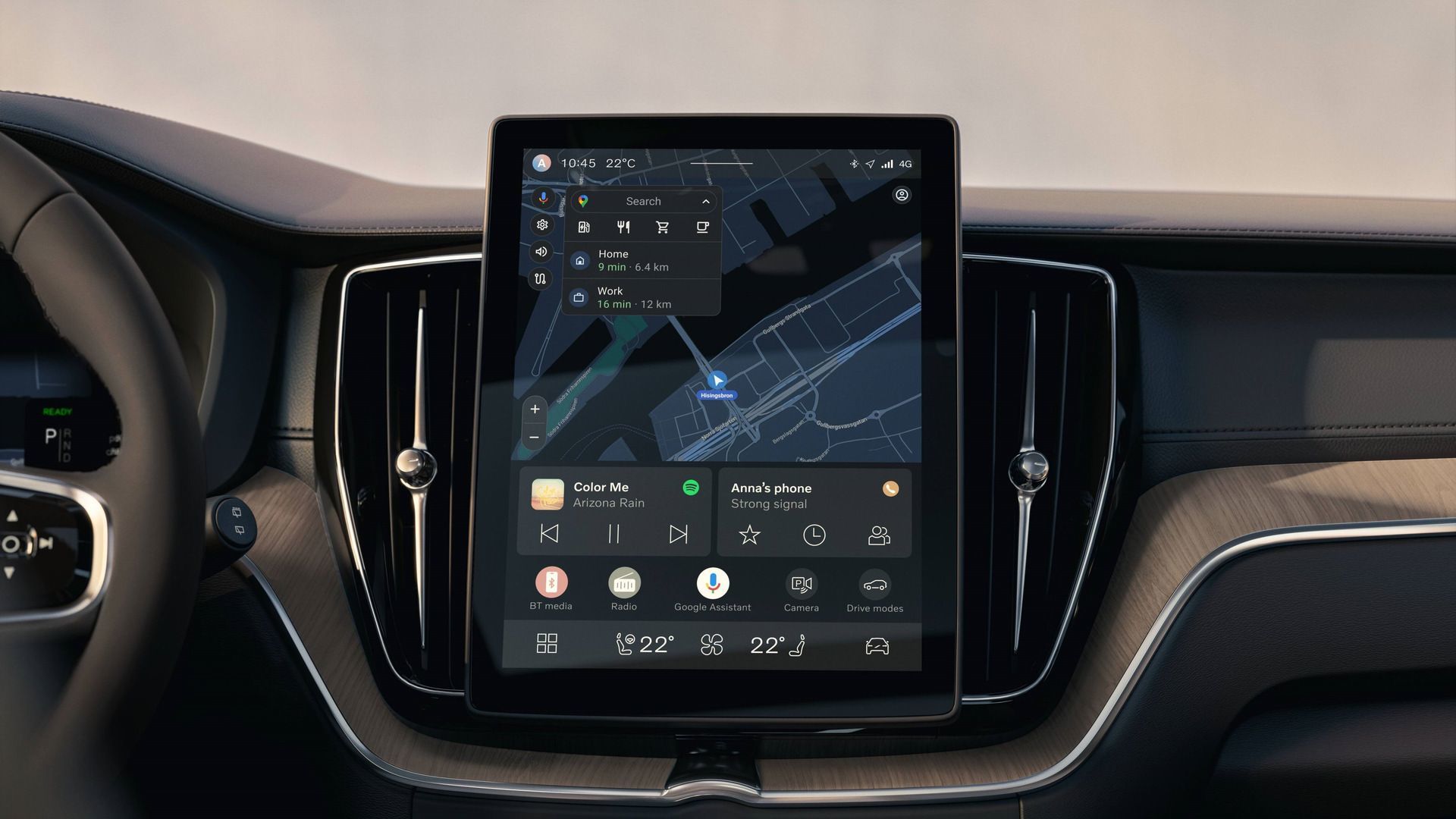
A Look at the Things Volvo's Voice Assistant Can Do
Talking to your car sounds like something out of a movie, but it has quietly become one of the more useful parts of driving a modern Volvo. Between...
Read morePowered and developed by
